Fix the Root Cause Instead of Just Picking a Villain

marcus

Well-Known Member
Joined
Sep 23, 2024
Messages
793
From https://finance.yahoo.com/economy/policy/articles/billionaire-jeff-bezos-says-america-152724456.html
Title : Billionaire Jeff Bezos Says America Needs to ‘Fix It at the Root’ Like Amazon Does Instead of Picking Villains ...
By Jeannine Mancini , June 2026

... “They’re using this age-old technique of picking a villain and pointing fingers,” Bezos said. “But the problem is that doesn’t solve anything.”...

“If we have a problem at Amazon, the way we would fix it is we’d go in and we’d do the five whys and we’d try to get to a root cause ... and then we fix it at the root,” Bezos said. “You’re fixing it forever. It’s a real solution.” ...

Bezos contrasted that with the finger-pointing he sees in politics ...
 
The difference is that in politics nobody wants to fix the roots.....
It would be like killling themselves, whereas they are there for glory and money....
 
From https://en.wikipedia.org/wiki/Root-cause_analysis

In science and reliability engineering, root-cause analysis (RCA) is a method of problem solving used for identifying the root causes of faults or problems.[1] It is widely used in IT operations, manufacturing, telecommunications, industrial process control, accident analysis (e.g., in aviation,[2] rail transport, or nuclear plants), medical diagnosis, the healthcare industry (e.g., for epidemiology). Root-cause analysis is a form of inductive inference (first create a theory, or root, based on empirical evidence, or causes) and deductive inference (test the theory, i.e., the underlying causal mechanisms, with empirical data).

RCA can be decomposed into four steps:

1. Identify and describe the problem clearly
2. Establish a timeline from the normal situation until the problem occurrence
3. Distinguish between the root-cause and other causal factors (e.g., via event correlation)
4. Establish a causal graph between the root-cause and the problem ...

The name of this process varies between application domains. According to ISO/IEC 31010, RCA may include these techniques: 5 whys, failure mode and effects analysis (FMEA), fault tree analysis, Ishikawa diagrams, and Pareto analysis ...
 
From https://en.wikipedia.org/wiki/Root-cause_analysis

In science and reliability engineering, root-cause analysis (RCA) is a method of problem solving used for identifying the root causes of faults or problems.[1] It is widely used in IT operations, manufacturing, telecommunications, industrial process control, accident analysis (e.g., in aviation,[2] rail transport, or nuclear plants), medical diagnosis, the healthcare industry (e.g., for epidemiology). Root-cause analysis is a form of inductive inference (first create a theory, or root, based on empirical evidence, or causes) and deductive inference (test the theory, i.e., the underlying causal mechanisms, with empirical data).

RCA can be decomposed into four steps:

1. Identify and describe the problem clearly
2. Establish a timeline from the normal situation until the problem occurrence
3. Distinguish between the root-cause and other causal factors (e.g., via event correlation)
4. Establish a causal graph between the root-cause and the problem ...

The name of this process varies between application domains. According to ISO/IEC 31010, RCA may include these techniques: 5 whys, failure mode and effects analysis (FMEA), fault tree analysis, Ishikawa diagrams, and Pareto analysis ...
Complicated way to describe problem solving....
But hey, the more complicated, the more ISO processes, EU regulations, the more pen pushers or "safety engineers" justify their job....

Been involved in equipment breakdown analysis, crane accident analysis...
Nowadays it is just about "was the right form filled properly".

A basic accident of somebody falling of a ladder, first question "was that ladder properly registerted on the site ladder register, and when was it last inspected ?"

The rest is secondary.....

"A construction ladder register tracks your inventory, verifies compliance, and logs required safety inspections. It is usually split into two parts: an Inventory Log and a Periodic Inspection Tracker."

And the "safety inspector" is usually 24 years old..

Aviation being maybe the exception.

Ok, rant over.
 
Last edited:
Complicated way to describe problem solving....
But hey, the more complicated, the more ISO processes, EU regulations, the more pen pushers or "safety engineers" justify their job....

Been involved in equipment breakdown analysis, crane accident analysis...
Nowadays it is just about "was the right form filled properly".

A basic accident of somebody falling of a ladder, first question "was that ladder properly registerted on the site ladder register, and when was it last inspected ?"

The rest is secondary.....

"A construction ladder register tracks your inventory, verifies compliance, and logs required safety inspections. It is usually split into two parts: an Inventory Log and a Periodic Inspection Tracker."

And the "safety inspector" is usually 24 years old..

Aviation being maybe the exception.

Ok, rant over.
Aviation yes an exception. Shipping, oil and gas, deep mining and others too.
 
'Fix It at the Root’; 'a method of problem solving used for identifying the root causes of faults or problems.' It seems to me is easier said than done when it is applied to Indonesia.

In Indonesia, the root cause of many problems has long been recognised as KKN (Corruption, Collusion, and Nepotism). This jargon has been part of the national discourse since the New Order era under Suharto. Yet despite decades of awareness and reform efforts, has it ever been eliminated, or even significantly reduced?

In my view, the only major measure that has not been seriously tried in Indonesia is imposing the death penalty for severe corruption cases, combined with the full confiscation of illegally acquired assets. This measure might be implemented for short term measure as a shock therapy while providing a long term solution such as via sub cultural change, creation of more civil societies, ethical and moral education since the childhood, etc.
 
Last edited:
…the only major measure that has not been seriously tried in Indonesia is imposing the death penalty for severe corruption cases, combined with the full confiscation of illegally acquired assets…
If we look at the Philippines it doesn’t seem to be that successful either.
 
If we look at the Philippines it doesn’t seem to be that successful either.
China is doing it since Xi Ping took power.
A continious flow....
Handy to eliminate political opponents BRW !
But's China's crackdown on officials and government workers visiting Macau casinos has been pretty efficient !
 
If we look at the Philippines it doesn’t seem to be that successful either.
Well, I believe the situation in the Philippines under President Duterte was different. His anti-drug campaign has often been compared to Indonesia's "Petrus" operations during the Suharto era. Both campaigns shared certain characteristics, including allegations of killings, torture, and other human rights abuses carried out without due process, trial.

However, their objectives were different. Suharto's campaign was directed against alleged communists, with some critics arguing that the Communist Party was used as a scapegoat and systematically eliminated. Duterte's campaign, on the other hand, was aimed at drug traffickers and criminal organisations involved in the illegal drug trade and killings sometimes in the battle without trial.

It is also important to note that Duterte openly promised a tough crackdown on drug-related crime during his presidential campaign. Since he was elected with strong public support, many Filipinos viewed his anti-drug policies favorably. Also, arguable he is successful:

"The campaign reduced the proliferation of illegal drugs in the country, but has been marred by extrajudicial killings allegedly perpetrated by the police and unknown assailants."

Another major difference is the scale: Suharto's actions reportedly resulted in the deaths of millions, whereas Duterte's campaign resulted in thousands of deaths.

He faced legal scrutiny from the International Criminal Court (ICC). The ICC's position is that many of those killed were deprived of due process and were allegedly eliminated without trial.

Also remember of the role of Human rights organisations such as Amnesty International which persistently advocating the abolition of the death penalty. Their efforts have influenced international discussions on the issue as they have a lot of resources to campaign the abolition of the death penalty.

Some observers argue that China has handled corruption and serious crime differently by prosecuting suspects through formal legal proceedings and imposing severe penalties, including the death penalty in certain cases. People often cite former Chinese Premier Zhu Rongji, who reportedly declared upon taking office in 1998 that officials should
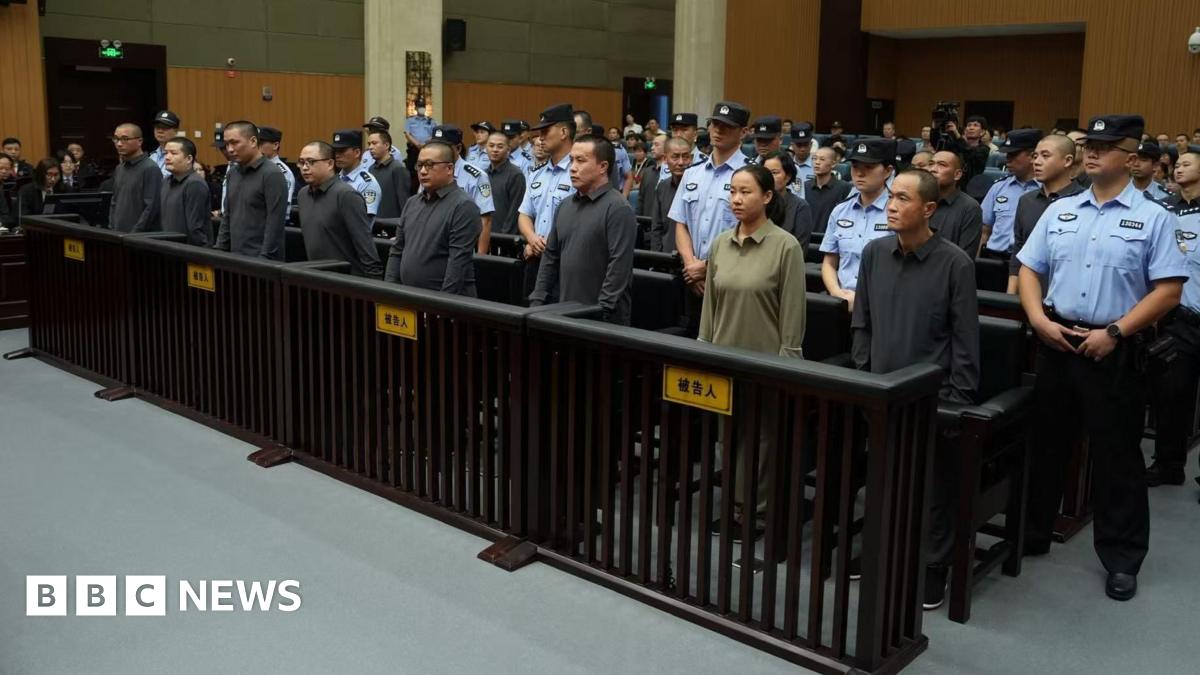
"prepare 100 coffins: 99 for corrupt officials, and one for himself if he was found corrupt," presenting himself as willing to be held to the same standard, e.g leading by example. Almost remember what they did recently with cracking down the scam, casino, human trafficking mafia sponsored by Chinese gang operating in Myammar, Cambodia, etc. They were tried in court and sentenced to death penalty. Is it not successful ?? At least for the time being. Certainly, it still exists as they can not do anything it if they are Myanmar, Cambodian citizens operating in those countries and arguably sponsored by the states, military.

China was once ranked similarly to Indonesia on CPI during the Suharto era. Supporters of China's approach point to its subsequent improvements as evidence that strong anti-corruption policies can be effective. At the same time, there remain many international organisations and activists who continue to campaign for the abolition of the death penalty worldwide.

In Indonesia, major challenge is that major institutions within the trias politica, the legislative, executive, and judicial branches generally oppose the expansion of the death penalty. The same with asset confiscation laws, it has been repeatedly delayed for obvious reason.

If a referendum were held on imposing the death penalty for severe corruption cases in Indonesia, a majority of Indonesians would support it. Initial evidence could be seen in public sentiment expressed on social media and in public discussions as an indication of such support.

 
Last edited:
Australia's history was intertwined with brutal British law that tried to stamp out crime with harsh punishments, the lash, chaining and the death penalty. The vast majority of "criminals' were desperately poor people with starve or steal options. In 1787 and 1788 the first fleet from England arrived in Australia with 900 convicts. Subsequently an estimated 162,000 convicts were imprisoned in dozens of penal institutions with a discipline that allowed flogging for offences such as whistling while working or winking at an officer and about 80 convicts were hanged each year.

It is understandable that victims of crime often want harsh punishment including death for criminals but that does not mean a better society. Increasingly, civilised societies are moving away from capital punishment. Unfortunately this is rarely accompanied by well funded rehabilitation programs and rampant recidivism maintains an unhealthy tension between crime and punishment. Norway and Sweden have made enormous strides with properly developed programs of rehabilitation reducing recidivism from 70% in the 1990s to just 20% in recent years.

Indonesia and other countries would be better served emulating Norway rather than stepping backwards into a brutal past with hanging seen as the supposedly ultimate deterrent.
 
Unfortunately this is rarely accompanied by well funded rehabilitation programs and rampant recidivism maintains an unhealthy tension between crime and punishment. Norway and Sweden have made enormous strides with properly developed programs of rehabilitation reducing recidivism from 70% in the 1990s to just 20% in recent years.

Indonesia and other countries would be better served emulating Norway rather than stepping backwards into a brutal past with hanging seen as the supposedly ultimate deterrent.
There is already evidence that the Norway and/or Sweden-style model would not work in Indonesia; you may have missed the earlier discussion (see posts #71 and #74). The underlying issue is the well-known problem of KKN (corruption, collusion, and nepotism). The question is whether such a model can function effectively under Indonesian society and justice system.


In addition, Norway and Sweden could not simply adopt capital punishment even if they wanted to. As members of the EU and/or EEA framework, they are subject to supranational judicial institutions, the ECJ and the ECHR, both of which oppose the death penalty.

Countries such as China, Indonesia, and the Philippines are not under the jurisdiction of those institutions. In Indonesia KKN is already embedded like a subculture. It will need a shock therapy like death penalty and asset confiscation for a short term solution and then followed by a more long term solution such as via sub cultural change, creation of more civil societies, ethical and moral education since the childhood, etc.. And remember while most other methods have been tried in Indonesia death penalty for heavy corrupt followed by assets confiscation have not been tried.
 
Last edited:

Follow Us

Latest Expat Indo Articles

Latest Tweets by Expat Indo

Latest Activity

New posts Latest threads

Online Now

Newest Members

Forum Statistics

Threads
6,643
Messages
112,008
Members
3,928
Latest member
ramizayn
Back
Top Bottom