How do you guys invest?

Thank you so much for the information you provided, it's very helpful. I am not very familiar with trading. I've been doing some investment with ETFs such as S&P500, DJIA, Nasdaq 100; but I certainly will do more research before moving into trading with international stocks.

Since you wrote about ETFs, there is one further point that came to my mind (since I also asked for information about ETF taxation in Indonesia some weeks ago here on this thread):

Maybe talk to a tax consultant or the tax office in Indonesia how distributions from ETFs are taxed in Indonesia. (I assume you are or will be a tax resident in Indonesia, right?). So far I did not get a clear answer on the question whether ETF distributions are taxed the same as dividends from overseas companies. Maybe the regulation is not very clear regarding ETFs yet.
 
I’m not crazy about (all types of) funds in general, at all. I know the ‘benefits’ but for me many of those become a disadvantage. Diversification which could water down the profits, opposite view of the future and direction the industry is going and thus lack of control, the people dependency, …..
 
Does Indonesia also use the FIFO (first in-first out) method when selling stocks by the way? I think this method is applied in most countries.

For example:

  • Person XY buys 1 stock of Tesla (or any other stock 🙂) at 200 USD on 2nd February.
  • Person XY buys 1 more stock of Tesla at 100 USD on 2nd July.
  • Person XY sells 1 stock of Tesla at 150 USD on 2nd November.

How much is his taxable gain/loss? FIFO would mean, that stock that he bought first (2nd February) is used for the calculation. In this example, that would result in a loss of 50 USD.

LIFO would mean the opposite: He would have a capital gain of 50 USD.

Or does Indonesia use a totally different method and always takes the average price of the stocks in the portfolio? In this case, 150 USD was the average purchase price. Therefore, the sell would result in no capital gain/loss (0 USD) in this example.
 
Well that depends entirely on your Nationality, resident status, liabilities and personal circumstances.
As far as I know each trade is treated individually

You buy. You sell. End of story
 
You don't choose which actually stock you sell
But it gets marked against the trade that bought it. The reverse
 
You don't choose which actually stock you sell
But it gets marked against the trade that bought it. The reverse

Yeah, but which trade would be marked in this case under Indonesian tax perspective?

In the fictive example, someone buys 1 Tesla stock on 2nd February and pays 200 USD for it. Then the person buys 1 Tesla stock on 2nd July and pays 100 USD for it.

When the person sells 1 (not both, only one of his two Tesla stocks, the other one Tesla stock stays in the person‘s portfolio) Tesla stock on 2nd November, which one of the two mentioned buying trades is marked against the selling trade then? The one at 200 USD (FIFO) or 100 USD (LIFO)?

In my country of origin and any other country I heard about that kind of regulation it would be the first trade (FIFO method, 200 USD in that example). But I did not find out about the regulation regarding this in Indonesia yet.
 
Why not as AVERAGE (150 USD)?

In my post (#323 in this thread) I mentioned that this is also one option that came to my mind. Could be that some countries use the average price method. But is Indonesia one of them or what does the regulation say? Does anyone know? I mean there must be one official rule since there is also an Indonesian stock market.
 
Nah, they charge you 0.1% on the total sales value. So selling a single Tesla stock of $150 would generate a PPh in Indonesia of $0,15.

Oh yes, you are right. I thought those 0.1% rule is like a transaction tax and a capital gains tax based on the individual income tax rate comes on top. But I looked it up now, and you are absolutely right...stocks of the Indonesian stock market 0.1% of the total sales value, and that seems to be it.

That explains why FIFO, LIFO and so on is irrelevant for stocks of the Indonesian stock market (if the investor is tax resident in Indonesia, of course). But for foreign stocks there must exist a rule (FIFO or whatever) since capital gains resulting from selling foreign stocks are taxed by the individual tax rate (on the cap. gain, not the total sales value) as far as I know.
 
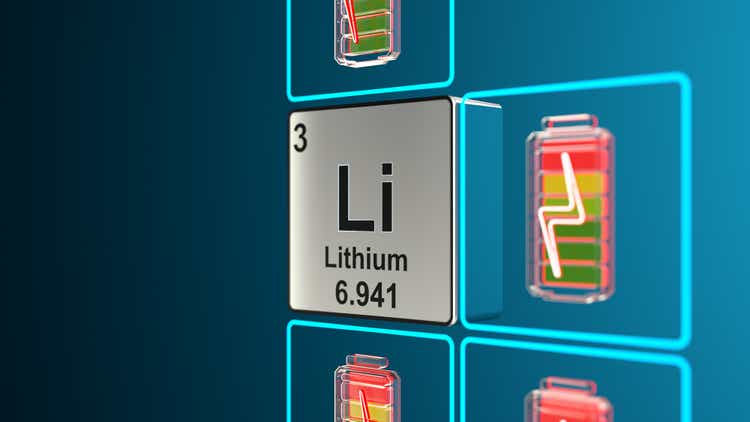
Tesla (TSLA) is mulling a bid for Sigma Lithium (SGML), Bloomberg reported late Friday. Sigma has not generated any revenue, but is poised to start commercial production. SGML stock soared Friday night, with ALB stock and other lithium plays also rising after hours.

Meanwhile, weekly China EV registrations will be out early Tuesday. That'll offer some clues about Tesla demand, as well as whether rivals such as BYD (BYDDF) are ramping up deliveries.

TSLA stock continued its huge run last week.

B33A1534-2305-43F9-8171-6A68DC0468CF.jpeg
 
I dropped a load more cash into TSLA in January.

I don’t particularly like Elon Musk but Tesla as a business is phenomenal.
 
The SGML news about acquisition from TESLA is here
Good Analyst price target. But it is still an unprofitable company. In the period of high interest rate the company like this will be struggling to pay their debt.
Normally the market is forward looking, so the current price target might have included assumption that Tesla will acquire SGML. But if there was a negative news of failed acquisition come out the price will plunge deeply.
It is not a good strategy to buy a stock when they have made a run.

Tesla (TSLA) is mulling a bid for Sigma Lithium (SGML), Bloomberg reported late Friday. Sigma has not generated any revenue, but is poised to start commercial production. SGML stock soared Friday night, with ALB stock and other lithium plays also rising after hours.

Meanwhile, weekly China EV registrations will be out early Tuesday. That'll offer some clues about Tesla demand, as well as whether rivals such as BYD (BYDDF) are ramping up deliveries.

TSLA stock continued its huge run last week.
 
Last edited:
My daughters college fund in the US is mostly stock. I like QQQ and SOXX ETFs. Only about 30-35% of her account is ETFs, though. I’d like to get it up to 70%.

2022 was a rough year, but the ETFs weathered it much better than the average of other stocks.
 
the ETFs weathered it much better than the average of other stocks.
Not so weird if you consider Ukraine etc. The best performing ETF’s are all energy related. And then as a good performer you also have the semiconductor sector where there have been huge shortages (see the desperation in the car industry demand & supply). Talking about that, obviously the digital currency and electric car manufacturers have done very poorly.
All that could change completely in 2023.
For me a fund that holds baskets with 800 or much more stocks makes no sense at all, the diversification and dilution is enormous.
 
Not so weird if you consider Ukraine etc. The best performing ETF’s are all energy related. And then as a good performer you also have the semiconductor sector where there have been huge shortages (see the desperation in the car industry demand & supply). Talking about that, obviously the digital currency and electric car manufacturers have done very poorly.
All that could change completely in 2023.
For me a fund that holds baskets with 800 or much more stocks makes no sense at all, the diversification and dilution is enormous.
Well, it’s all personal preference. QQQ obviously has 100 stocks in it’s basket. I’m not sure of SOXX, but I’m pretty sure it’s under 100 stocks.

Performance is obviously important. Sure, you could have bought 100k worth of Apple twenty years ago, and be rich now. Or the same with Amazon, Google or Tesla. Look at the 10 year performance of a stock or ETF.

While I do buy a lot of individual stocks, I feel I’d do a lot better with ETFs in the long run.

I bought Meta, Google, Amazon and Apple in the last year. Some are up, some are down. As I don’t want to spend too much time investigating stocks, I’d rather have time to do other things.
 
Well, it’s all personal preference. QQQ obviously has 100 stocks in it’s basket. I’m not sure of SOXX, but I’m pretty sure it’s under 100 stocks.

Performance is obviously important. Sure, you could have bought 100k worth of Apple twenty years ago, and be rich now. Or the same with Amazon, Google or Tesla. Look at the 10 year performance of a stock or ETF.

While I do buy a lot of individual stocks, I feel I’d do a lot better with ETFs in the long run.

I bought Meta, Google, Amazon and Apple in the last year. Some are up, some are down. As I don’t want to spend too much time investigating stocks, I’d rather have time to do other things.

Yes, if you do not want to spend many hours per month, ETF is the best way of investing.

Only the tax component seems not to be so clear if you are tax resident in Indonesia. Are you taxable here? How are the ETF‘s distributions taxed in your case?
 

Users who viewed this discussion (Total:0)

Follow Us

Latest Expat Indo Articles

Latest Tweets by Expat Indo

Latest Activity

New posts Latest threads

Online Now

No members online now.

Forum Statistics

Threads
6,587
Messages
110,726
Members
3,882
Latest member
parmindersanghvi566
Back
Top Bottom