

- Joined
- May 30, 2023
- Messages
- 359
I have friends from Paris, OntarioEnded up in Paris. Texas



I have friends from Paris, OntarioEnded up in Paris. Texas
And you could also check out Texas, Queensland.Ended up in Paris. Texas
"I see artificial Intelligence doing a pretty good job in explaining this stuff also."I think we are on a tipping point here where artificial intelligence, robots, online programms etc. can be a "plus" in educating students.
When I was a student, I had to learn everything from books and attending college.
When I watch videos now, on youtube, on the subjects I once studied, I am amazed how nowadays the teachers could / can explain the stuff much better, supported by tons of animations and taped expirements and so.
Also, a cooperation (or like Will Smith's wife phrase "entanglement") between universities and industry is a "plus" in educating and motivating students. I got a much better understanding of the theory, once put in practice. In Eindhoven (home town of Phillips) there is already a tight connection between university and industry and support in "start ups" to put innovations in practice.
I am retired now and with my knowledge (e.g. about how to model a businesscase and calculate or how to analyse datasets based on statistic tool R to see if there’s a correlation between variables). I could teach students the cream of the crop of new methods. But then again I see artificial Intelligence doing a pretty good job in explaining this stuff also.
It is by designed. It is the trend for the customer services served by the chatbot, try preventing people to get in touch with human CS as much as they could possibly do. Doing this they actually train their robots which in turn could be used it to improve their robots."I see artificial Intelligence doing a pretty good job in explaining this stuff also."
Artificial lack of intelligence does a good job???? Like on Amazon, it says sorry I don't understand, please expand your question. You have to get past this point before they'll let you speak to someone. So you elucidate further and it still won't pass you on to a human. However you type a load of gibberish and the automated moron is happy and connects you to a human!!!
This is why I really appreciate financial institutions that buck the trend (like Schwab in the US - sure it's aimed at higher net worth individuals but any taxpayer can open an account).It is not just Amazon, other platforms such as PayPal, Banks or other Fintech platforms have been pushing this service
During Ramadan some kampung mosques would broadcast their entire tarawih prayer on the speakers. It’s not up to midnight, but it can get quite late in the evening.
In the age of smartphones, prayer calls on loud speakers are obsolete. If you can be on WA, IG, and FB 16 hours a day, you know what time it is. If you want to adhere to tradition, then shout the adzan out without electronic amplification, like what you do inside the mosque itself.
The mosque in my parents’ kompleks is built and funded by the kompleks residents, so it doesn’t need to continuously advertise its presence to draw attendance. As such the speakers are kept at a minimum, and kids aren’t allowed to have loud fun in the guise of prayer.
Meanwhile the kampung mosque half a km away blasts its speakers like tomorrow is kiamat, to the point where my taxi driver made a comment about it. He thought a call to prayer is good, but it didn’t need to be that loud.
In my unscientific opinion, part of the loudness is money, the other part is a defiant gesture toward the rich folks around. They may not be flush with cash, but they can yell to their heart’s content and nobody can do a damn thing about it.
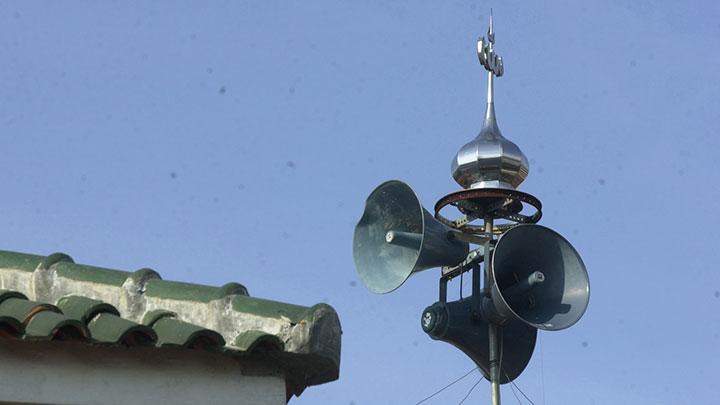
Well, this guideline had some effect. The mosque near my apartment building in South Jakarta is less noisy compared to a year ago. Last year the noise was brutal during ramadan. I hope this new statement of the ministry doesn't nullifying the effect now.Even the religious affairs ministry are scared of the loudspeaker nazis:
Religious Affairs Ministry Says No Ban on Use of Mosque Loudspeakers
Indonesian Religious Affairs Ministry clarified that the ministry has never prohibited the use of loudspeakers in mosques during Ramadan.en.tempo.co
It did sadly ... noise of mosque is back to 'brutal'.I hope this new statement of the ministry doesn't nullifying the effect now.
I wonder .. would ramadan effect Indonesian economy? Positively or negatively? Is there any research on this?"During Ramadan some kampung mosques would broadcast their entire tarawih prayer on the speakers. It’s not up to midnight, but it can get quite late in the evening."
During Ramadan the Coran has to be broadcast in full, over the duration of Ramadan, in the evening after the evening prayer a bit every day.
You know that I suppose ?
Using W.A. ? FFS, what's next ? Going to the church on visio conference ?
On the one hand there is a huge loss of productivity but on the other hand a big stimulus in spending on travel and gifts so I suspect that in total it is a plus for the economy.I wonder .. would ramadan effect Indonesian economy? Positively or negatively? Is there any research on this?
Core inflation in Indonesia is low (around 1.6), meaning household expenditures are weak. People don't have money to spend I guessOn the one hand there is a huge loss of productivity but on the other hand a big stimulus in spending on travel and gifts so I suspect that in total it is a plus for the economy.


How does that link between core inflation and household expenditures work?Core inflation in Indonesia is low (around 1.6), meaning household expenditures are weak. People don't have money to spend I guess
If people have a lot of purchasing power, consumer prices will rise, and therefore inflation. Indonesia's core inflation has been low for a long time, a sign that the purchasing power of the people is weak. Moreover, the Rupiah is weakening, a sign that capital is fleeing the country (i.e. due to the strength of the dollar or because of the war). A weak rupiah is good for the export of Indonesian products. However, Indonesia imports more than it exports. So more demand for dollars, because imports have to be paid for in dollars. Hence, prices for import products go up, like oil/fuel prices. So, people have less money to spend for their daily groceries. Hence, core inflation stays low. Normally a sign that there is a crisis going on. But hey, ... forcasting the economy is just like forcasting the weather.How does that link between core inflation and household expenditures work?
Put the religious belief aside. IMO you do not need to do the research to know this. But who in the right mind would want to do this ? How do they collect the data ? Which institution want to fund and publish the actual finding knowing that their institution might be destroyed by the mob and those get involved might be ending up in jail ?I wonder .. would ramadan effect Indonesian economy? Positively or negatively? Is there any research on this?


