
INFORMATION AND COMMUNITY FOR EXPATS IN INDONESIA


You are using an out of date browser. It may not display this or other websites correctly.
You should upgrade or use an alternative browser.
You should upgrade or use an alternative browser.
How do you guys invest?
- Thread starter Ruserious
- Start date
Interesting, that a Chinese bank explains, even promotes, the function of a rural bank in Indonesia.
The establishment of BPR in Indonesia was officially initiated In 1988, through Indonesian Presidential Decree No. 38. The primary aim was to assist farmers, employees, laborers, and low-income families in avoiding the pitfalls of very high-interest loans offered by moneylenders or loan sharks.
Around the same time, China, being a communist country with a predominantly agricultural economy, might have faced challenges related to loan sharks. There is a possibility that Indonesia adopted a similar concept from China, although I haven't done a detailed research on this matter.
The loans disbursed by BPR are generally of lower value, and this justifies the application of higher interest rates compared to conventional bank loans.
Last edited:

- Joined
- Jul 20, 2016
- Messages
- 165
If one is under 40 and has 10.000 USD spare, buy some piece of land near a beach in not yet developped areas like LaBajo in Flores or similar.
In 10 / 15 / 20 years it will probably be worth MUCH more.
I thought about that idea, buying land as an investment. But we have to check it from time to time which is not handy if it's situated far from where we live . There's always a risk that people will come and build their house on it and later claim the land as theirs. Even at the end we win the case in the court, it's unnecessary headache during the trial & we are "the bad guys that opress poor people". Anyway, it's still an idea to consider if we're back to Indonesia someday.If one is under 40 and has 10.000 USD spare, buy some piece of land near a beach in not yet developped areas like LaBajo in Flores or similar.
In 10 / 15 / 20 years it will probably be worth MUCH more.
My uncle has some lands (in 2 different locations) which he lends for free as a vegetable garden for a neighbour. The neighbour "guards" the land so it's a win-win situation.
Last edited:

- Joined
- May 9, 2020
- Messages
- 1,292
My wife's family is having a similar problem in her home village. The dispute is still ongoing at this time. The local chiefs had made a decision but the other side is still disputing the outcome, so it looks like it's on the way to the legal system. It's not a lot of land and in a place that most people wouldn't care about but yet here we are. I have a feeling the dispute will continue even after a court has made a decision. Nobody will ever be a clear winner.I thought about that idea, buying land as an investment. But we have to check it from time to time which is not handy if it's situated far from where we live . There's always a risk that people will come and build their house on it and later claim the land as theirs. Even at the end we win the case in the court, it's unnecessary headache during the trial & we are "the bad guy that opress poor people". Anyway, it's still an idea to consider if we're back to Indonesia someday.
My uncle has some lands (in 2 different locations) which he lends for free as a vegetable garden for a neighbour. The neighbour "guards" the land so it's a win-win situation.
What might happen in the future they, their children, etc might claim it is theirs and will not stop doing that before you compensate them.My uncle has some lands (in 2 different locations) which he lends for free as a vegetable garden for a neighbour. The neighbour "guards" the land so it's a win-win situation.
- Joined
- Jul 20, 2016
- Messages
- 165
Luckily the relationship between my uncle and the family is good. My uncle comes there once or twice a year. But yes, it's possible that in the future someone thinks: yep, that's mine.What might happen in the future they, their children, etc might claim it is theirs and will not stop doing that before you compensate them.
Last edited:
- Joined
- Jul 20, 2016
- Messages
- 165
The land status in Indonesia is often tricky. I heard a story that a man purchased a land to find out later that another person owns also a certificate of that land. That reminds myself that I have to do a thorough check up of everything.My wife's family is having a similar problem in her home village. The dispute is still ongoing at this time. The local chiefs had made a decision but the other side is still disputing the outcome, so it looks like it's on the way to the legal system. It's not a lot of land and in a place that most people wouldn't care about but yet here we are. I have a feeling the dispute will continue even after a court has made a decision. Nobody will ever be a clear winner.
I also heard from a friend that works on projects in eastern part of Indonesia about a company that bought a land. They owned the SHM, land ownership title. Legally on paper, it's theirs. Then the people from surrounding neighbourhood came with their petinggi adat, local community chief, and they declared: no, no. You bought the forest. They trees are now gone. The land is still ours.
Last edited:
- Joined
- Jul 20, 2016
- Messages
- 165
I worked in Surabaya and once wondered how people can illegally build houses by the river bank. The driver of the company said: first they built bamboo hut. Noone protested, so they built it bigger with woods and then bricks and concrete. When finally the authorities came, it's already years and generations later and it's impossible to get rid of them without civilian clash.
There are comparable regions in Jakarta situated near canals and rail tracks. These locations don't technically belong to the residents, but over the course of a few decades and across generations, they have become entrenched and are unwilling to relocate without proper compensation.I worked in Surabaya and once wondered how people can illegally build houses by the river bank. The driver of the company said: first they built bamboo hut. Noone protested, so they built it bigger with woods and then bricks and concrete. When finally the authorities came, it's already years and generations later and it's impossible to get rid of them without civilian clash.
Watch these videos for a glimpse of the situation in the Tanah Abang Area and other areas in central Jakarta:
This is around Tanah Abang Area in central Jakarta.
and another area in Jakarta.
Notice that people are selling food in this area. Also there are a pile of rubbish, plastic bags in the river, canal. No wonder this open canal causing flood when there are a few days torrential rains.
During Ahok's tenure as the deputy governor and later as the Governor of Jakarta, efforts were made to relocate people to more habitable living spaces such as apartment blocks. However, these initiatives faced resistance from individuals exploiting religious sentiments.
Those suggesting the purchase of land in remote areas should exercise caution, considering the unique circumstances in Indonesia. It's unpredictable whether the land might be "tanah adat," which refers to customary land traditionally and collectively owned and governed by indigenous communities based on their customs and traditions.
There's a risk that the Land Authority might issue a certificate easily, especially if substantial payment is involved, knowing that any potential issues may not arise for several decades—often after their retirement. Alternatively, the land may remain uninhabitable for generations due to a lack of development plans. It's essential to be mindful that occupying a remote island in Indonesia may go unnoticed until it becomes a lucrative venture.
Also, it is not uncommon there are more than one certificate is issued for the same plot of land.
Last edited:
harryopal1
Well-Known Member
- Joined
- Aug 4, 2016
- Messages
- 2,508
I am not aware of the precise complexities but under English law there are provisions that if people live in an area or even squat in a house for long period of time without challenge they can lay claim to ownership.
"...
if you can prove: you, or a succession of squatters, have occupied the property continuously for 10 years (12 years if it’s not registered with HM Land Registry)
"...
if you can prove: you, or a succession of squatters, have occupied the property continuously for 10 years (12 years if it’s not registered with HM Land Registry)
- you (or your predecessors) acted as owners of the property for the whole of that time
- you (or any of your predecessors) did not have the owner’s permission, for example the property was not originally rented to a squatter
John indonesia
Well-Known Member
- Joined
- Dec 7, 2023
- Messages
- 282
Deposito (Weak, so just about holding its own as far as inflation goes)
BRI high interest account (Pretty safe but the returns aren't much above inflation)
BRI high interest account (Pretty safe but the returns aren't much above inflation)
@pantaiema could you make this statement concrete? Let's say a deposit at some random BPR of 100 juta what is then the return, taking tax into account? Compared to Seabank deposito (+ promo 1,2 juta).Deposito (Weak, so just about holding its own as far as inflation goes)
BRI high interest account (Pretty safe but the returns aren't much above inflation)
Last edited:
In indonesia the saving is taxed @20%, say if you get the interest (AER) from BPR 6.75%. You will only get 5.4%@pantaiema could you make this statement concrete? Let's say a deposit at some random BPR of 100 juta what is then the return, taking tax into account? Compared to Seabank deposito (+ promo 1,2 juta).
the interest: 5.4% of Rp100m = Rp5.4m
From the sea bank you get 6%. Also deducted @20% , so your actual return is 4.8%
the interest: 4.8% of Rp100m = Rp4.8m
The bonus of IDR1.2m with Seabank in case of Rp100m saving is irrelevant as you will only get bonus if you save at least Rp120m
But suppose you save Rp120m, and you get the bonus of Rp1.2m in one year time frame, it is an additional interest that equate 1% (to simplify). So you could assume you get 6%+1%=7%.
7% is better than 6.75% (before tax is deducted) but keep in mind with Seabank you do not get LPS while with BPR you still get LPS guaranteed.
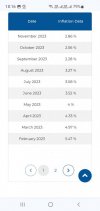
Both are above the inflationary rate which is Steady at around 2.28%.
Last edited:
Expected inflation rate Indonesia 2024 ... 2.9%In indonesia the saving is taxed @20%, say if you get the interest (AER) from BPR 6.75%. You will only get 5.4%
the interest: 5.4% of Rp100m = Rp5.4m
From the sea bank you get 6%. Also deducted @20% , so your actual return is 4.8%
the interest: 4.8% of Rp100m = Rp4.8m
The bonus of IDR1.2m with Seabank in case of Rp100m saving is irrelevant as you will only get bonus if you save at least Rp120m
But suppose you save Rp120m, and you get the bonus of Rp1.2m in one year time frame, it is an additional interest that equate 1% (to simplify). So you could assume you get 6%+1%=7%.
7% is better than 6.75% (before tax is deducted) but keep in mind with Seabank you do not get LPS while with BPR you still get LPS guaranteed.
Both are above the inflationary rate which is Steady at around 2.28%.
Attachments


Yes, the whole point of putting your money in the bank (saving account or deposito) is to keep your money safe .. you want it back.7% is better than 6.75% (before tax is deducted) but keep in mind with Seabank you do not get LPS while with BPR you still get LPS guaranteed.
Ya Allah .. 1,2 juta hilangDont forget the monthly 100rb admin account service charge
Oh look, 12 x 100rb is ??? lol

make_batik_great_again
Well-Known Member
- Joined
- Nov 27, 2019
- Messages
- 325
What might happen in the future they, their children, etc might claim it is theirs and will not stop doing that before you compensate them.
But if it is SHM and the SHM certificate is under your name, how big are their chances to win that case?
Certainly, in a scenario where all factors are equal and there is no influence from bribery, winning a legal case becomes more likely. However, when contending with formidable developers with big money and influence, such as the developer of Meikarta megaproject, the dynamics of the situation can change. Law is not and exact science like math it could always be twisted by someone who has the power to do that. Search it in this forum regarding Meikarta where they could unilaterally change the fine they want significantly different to what is stated on the contract.But if it is SHM and the SHM certificate is under your name, how big are their chances to win that case?
To illustrate, I have a friend in Indonesia. His parents embroiled in a legal battle. He was not even fighting against a big fish. He holds a Certificate of Land Ownership (SHM), while someone else is claiming rights based on a piece of paper letter look alike inconclusive piece of documentation and proof of ownership. It has taken him over ten years to assert his rightful claim.
Furthermore, even in the highest court, he was compelled to make payments in order to secure a favourable outcome.
I'm not asserting that this will universally occur, but such a scenario is not entirely improbable.
Last edited:
Ya Allah .. 1,2 juta hilang
Typically account fee is ranging Rp5.000 - Rp 17.000 in Indonesian Banks. Not Rp100k and that is typically for a current account, not a saving account.

Guide to Various Bank Fees in Indonesia - Aspire
there are fees for each activity when we use banking services. Check out the details of these costs here
 aspireapp.com
If it is just for a saving account the account fee is typically very low as you can not use it like a current account, frequent withdrawals, the use of debit card, ATM, payment to other account in the same bank, etc. In many other countries the fee for saving account is even nil.


