DON'T PANIC.... well, maybe a little bit.

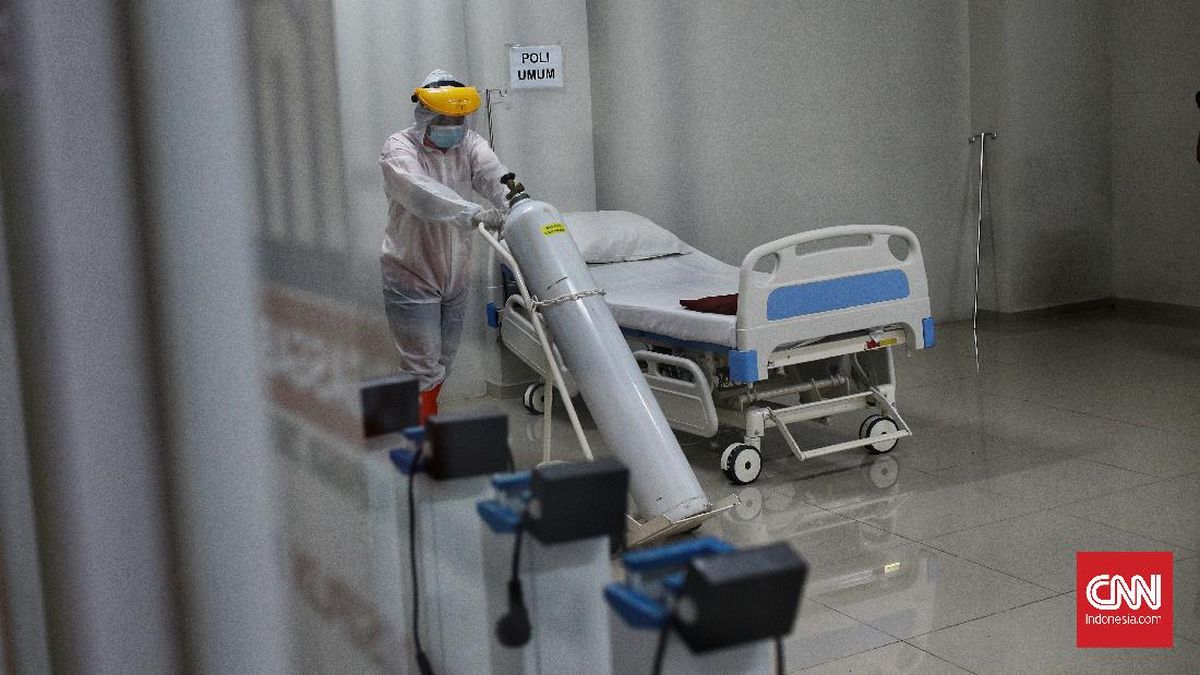
Out here in the desa where I spend a lot of my time, things are starting to get bad. Clinics are shut down for anyone other than suspected Covid patients. All beds in the local and nearby city medical facilities are full. Mini markets are working on reduced hours (9-7, and I'm not sure how this helps). Apparently a few people who live near the market have died in the last week. This is mostly gossip, btw. There's no local newspaper or anything.

A couple of weeks ago I was still hearing people saying that smoking, eating fruit/leaves and massage therapy would protect them from Covid. Now the health ministry has shut down the massage place. I see more people wearing masks (actually covering their faces) than I have in the last year. I finally started doubling mine. Perhaps people here will take the virus seriously now. Hopefully it will be in time to save some lives.
 
Unfortunately people always get tired and start to ignore covid protocols after a while. It’s always a competition between fear and fatigue.
 
Price of oxygen has more than doubled in Jakarta. Tanks are becoming scarce. Wasn't it around the 1st of June Indonesia donated around 13,000 to India? Were not people at that time saying already Indonesia was going to get really bad since so many don't pay attention to protocols?
 
CNN Indonesia reports that the isolation/ICU bed occupancy of 5 out of the 6 provinces in Java is now in the "Red" category (over 80% occupancy).

Banten (92%), Jakarta (90%), W Java (88%), C Java (87%), Yogyakarta (86%). E Java barely missed it with "only" 78%.


Last edited:
Out here in the desa where I spend a lot of my time, things are starting to get bad. Clinics are shut down for anyone other than suspected Covid patients. All beds in the local and nearby city medical facilities are full. Mini markets are working on reduced hours (9-7, and I'm not sure how this helps). Apparently a few people who live near the market have died in the last week. This is mostly gossip, btw. There's no local newspaper or anything.
...
Perhaps it is to fit in with police working hours?
 
Sadly I think limiting the mall operation hours and limiting restaurants, etc won't effectively reduce the infection rate...it will certainly impact the economy more. Last time I checked Friday prayers were still going on and somebody told me (as he also the stubborn one) one mosque in Tangerang last week had Friday prayers with many of them without masks on. Try to stop that and then some will cry it's religious discrimination.

Oh yeah, trying to prevent the possible mudik for the upcoming Idul Adha? Won't be 100% effective and it should've been done for the past Ramadhan. Even then I know quite a few people said that either they waited until really late in the evening (past midnight) since police already left some of the gated posts...or pick the less strict one and if the mudikers happened to use one travel minibus (say group of 8-10?) each would give 50rb per person to the driver, who would collect and pass it on the kind officer who would let them pass.

I'd say don't f### with the mall/businesses operating hour at least we can still save the economy..just do like Singapore of max 5 people per table dining...I've seen at least about 30 people from the same office (wearing the same kind of uniform) smoking and chatting at the outdoor kopitiam artha gading during lunch hour....Focus on vaccinating people instead. Just my opinion.
 
Last edited:
CNN Indonesia reports that the isolation/ICU bed occupancy of 5 out of the 6 provinces in Java is now in the "Red" category (over 80% occupancy).

Banten (92%), Jakarta (90%), W Java (88%), C Java (87%), Yogyakarta (86%). E Java barely missed it with "only" 78%.
https://t.co/ykOdh1YylB?amp=1

I doubt Jakarta occupancy bed is 90% as there are ques for beds. I know a case person waited 10 days for bed in ICU, got it and died 2 hours after getting the bed 2 days ago(woman, Indonesian, bellow 40 with diabetes).
I know other people.waiting for beds. Best case you will enter wisma atlet and wait que for treatement, but you could wait for days as not enough doctors. Private hospitals are all full according to the sick people seeking treatement.
 
I noticed that the vaccination rate has increased a lot over the past few days. Yesterday they exceeded 1m for the first time. Previously it was hovering between 400k and and 600k per day.
It's too late for this wave (only 4.8% of the population is double vaccinated), but could help for future waves, if they can sustain this rate.
 
Last edited:
Someone sent me a link about new restrictions set to start on the 3rd and go for 2 weeks. Here's the link. https://kumparan.com/kumparannews/p...tsapp&utm_campaign=share&shareID=mcyZyaPj9oQi
There is too much in there for me to translate, but most of it is pretty mild, like last year's rules. No mentions of restrictions on travel by private vehicles.

This one stood out to me:
12. Pelaku perjalanan yang menggunakan moda transportasi jarak jauh (pesawat, bus dan kereta api) harus menunjukkan kartu vaksin (minimal vaksin dosis I) dan PCR H-2 untuk pesawat serta Antigen (H-1) untuk moda transportasi jarak jauh lainnya.
Does this mean a first vaccine shot is a strict requirement for flights within Java and Bali and flights originating (and arriving?) in Java and Bali?

There are many people who are not even eligible for vaccination, whether children, for medical conditions, or, as we have heard here, many WNA have been denied the shot.
 
This one stood out to me:

Does this mean a first vaccine shot is a strict requirement for flights within Java and Bali and flights originating (and arriving?) in Java and Bali?

There are many people who are not even eligible for vaccination, whether children, for medical conditions, or, as we have heard here, many WNA have been denied the shot.
I'd say look at any way it can be interpreted by officials & expect it to be interpreted those ways.
There will be some who say a clear test is enough, some who say it must be test & vaccine
some who might not even check.
I assume that for transport in a private vehicle the checks will be fewer (N.B. Ferry is not mentioned).
 
Someone sent me a link about new restrictions set to start on the 3rd and go for 2 weeks. Here's the link. https://kumparan.com/kumparannews/p...tsapp&utm_campaign=share&shareID=mcyZyaPj9oQi
There is too much in there for me to translate, but most of it is pretty mild, like last year's rules. No mentions of restrictions on travel by private vehicles.
Google says:

" Just waiting for the government to announce it.
The following are the complete rules in the Emergency PPKM:
I. Implementation Period of Emergency PPKM: 3-20 July 2021 with a target of decreasing the addition of daily confirmation cases <10 thousand/day
II. Area Coverage: 45 Regencies/Cities with an Assessment Score of 4 and 76 Districts/Cities with an Assessment Score of 3 in Java and Bali.
III. Scope of Activity Restrictions:
1. 100% Work from Home for non essential sector
2. All teaching and learning activities are carried out online
3. For essential sectors, a maximum of 50% of work from office (WFO) staff is applied with a health protocol, and for critical sectors a maximum of 100% of work from office (WFO) staff is allowed with a health protocol.

a. The coverage of essential sectors is finance and banking, capital markets, payment systems, information and communication technology, non-quarantine handling hotels, and export-oriented industries.
b. The coverage of critical sectors is energy, health, security, logistics and transportation, food, beverage and supporting industries, petrochemicals, cement, national vital objects, disaster management, national strategic projects, construction, basic utilities (electricity and water), as well as industrial needs fulfillment everyday staples of society.
c. For supermarkets, traditional markets, grocery stores, and supermarkets that sell daily necessities, operating hours are limited to 20.00 local time with a visitor capacity of 50% (fifty percent);
4. Activities at shopping centers/malls/trade centers are closed
5. Restaurants and restaurants only accept delivery/take away
6. The implementation of construction activities (construction sites and project sites) operates 100% (one hundred percent) by implementing stricter health protocols;

7. Places of worship (mosques, prayer rooms, churches, temples, temples and pagodas as well as other public places that function as places of worship) are temporarily closed
8. Public facilities (public areas, public parks, public tourist attractions and other public areas) are temporarily closed;
9. Art/cultural, sports and social activities (locations of arts, culture, sports facilities, and social activities that can cause crowds and crowds) are temporarily closed;
10. Public transportation (public vehicles, mass transportation, taxis (conventional and online) and rental/rental vehicles) is enforced with a maximum capacity setting of 70% (seventy percent) by implementing stricter health protocols;
11. The wedding reception is attended by a maximum of 30 (thirty) people by implementing stricter health protocols and not allowed to eat at the reception. Food can still be provided in sealed containers to take home.

12. Travelers who use long-distance transportation modes (airplanes, buses and trains) must show a vaccine card (at least dose I vaccine) and H-2 PCR for planes and Antigen (H-1) for other long-distance transportation modes.
13. Regional Government Satpol PP, TNI, Polri to carry out strict supervision of the implementation of the tightening of community activities above, especially in point 3.
14. Strengthening 3T (Testing, Tracing, Treatment) needs to be continuously applied:
a. Testing needs to be continuously improved to reach a minimum of 1/1000 population / week. Testing needs to be increased until the positivity rate is <5%. Testing needs to be continuously improved for suspects, i.e. those who are symptomatic, and also in close contacts.
b. Tracing needs to be done until there are >15 close contacts per confirmed case. Quarantine needs to be carried out on those identified as close contacts. Once identified close contacts should be checked (entry-test) and quarantine needs to be carried out. If the test result is positive, then isolation is necessary. If the test result is negative, then quarantine is necessary. On the 5th day of quarantine, it is necessary to carry out an exit-test to see if the virus is detected after/during the incubation period. If negative, then the patient is considered to have completed quarantine.


c. Treatment needs to be done comprehensively according to the severity of the symptoms. Only patients with moderate, severe, and critical symptoms need to be hospitalized. Isolation needs to be done strictly to prevent transmission.
15. Achievement of vaccination target of 70% of the total population in priority cities/districts no later than August 2021
The following is a list of areas that are implemented by Emergency PPKM:

Assessment Area 4
1. Kota Tangerang
2. Kota Tangerang Selatan
3. Purwakarta
4. Jakarta Barat
5. Jakarta Timur
6. Jakarta Selatan
7. Jakarta Utara
8. Jakarta Pusat
9. Sukoharjo

10. Sleman
11. Tulungagung
12. Kota Tasikmalaya
13. Rembang
14. Kota Yogyakarta
15. Sidoarjo
16. Kota Sukabumi
17. Pati
18. Bantul
19. Madiun
20. Kota Depok

21. Bekasi
22. Kudus
23. Lamongan
24. Kota Cirebon
25. Kota Tegal
26. Kota Surabaya
27. Kota Cimahi

28. Kota Surakarta
29. Kota Mojokerto
30. Kota Bogor
31. Kota Semarang
32. Kota Malang
33. Kota Bekasi
34. Kota Salatiga
35. Kota Madiun

36. Kota Banjar
37. Kota Magelang
38. Kota Kediri
39. Kota Bandung
40. Klaten
41. Kota Blitar
42. Karawang
43. Kebumen
44. Grobogan
45. Banyumas

Assessment Area 3

1. Tangerang
2. Sumedang
3. Kepulauan Seribu
4. Wonosobo
5. Kulon Progo
6. Tuban
7. Kota Denpasar

8. Serang
9. Sukabumi
10. Wonogiri
11. Gunungkidul
12. Trenggalek
13. Jembrana
14. Lebak
15. Subang

16. Temanggung
17. Situbondo
18. Buleleng
19. Kota Serang
20. Pangandaran
21. Tegal
22. Ponorogo
23. Badung
24. Kota Cilegon

25. Majalengka
26. Sragen
27. Pasuruan
28. Gianyar
29. Kuningan
30. Semarang
31. Pamekasan

32. Klungkung
33. Indramayu
34. Purbalingga
35. Pacitan
36. Bangli
37. Garut
38. Pemalang
39. Ngawi

40. Cirebon
41. Pekalongan
42. Nganjuk
43. Cianjur
44. Magelang
45. Mojokerto
46. Ciamis
47. Kota Pekalongan

48. Malang
49. Bogor
50. Kendal
51. Magetan
52. Bandung Barat
53. Karanganyar
54. Lumajang
55. Bandung

56. Jepara
57. Kota Probolinggo
58. Kota Pasuruan
59. Demak
60. Kota Batu
61. Cilacap
62. Kediri
63. Brebes

64. Jombang
65. Boyolali
66. Jember
67. Blora
68. Gresik
69. Batang
70. Bondowoso
71. Banjarnegara

72. Bojonegoro
73. Blitar
74. Banyuwangi
75. Bangkalan

 
Some new study to read, again..have fun:

 
Some new study to read, again..have fun:

Well... There is a line right there in the abstract that strikes me as a bit odd. "The NNTV (this is how many people you must vaccinate to avoid an outcome) is between 200–700 to prevent one case of COVID-19 for the mRNA vaccine marketed by Pfizer..."

So... The success rates for the Pfizer vaccine is 86%. We multiply their 200-700 "needlessly vaccinated people" by 0.86 to see what they think my odds of getting the disease without the vaccine are. We get 1-172 and 1-602. So, they estimate that without vaccination, my chances of getting the disease are somewhere between 00.5% and 00.1%.

I know that herd immunity rates are much, much, much higher than 00.5%. The expected rate of infection should be somewhere closer to 60-70%, if we are not taking vaccines or entering a total, extended, lockdown until the disease cycles through all infected people.

I just... This is probably the same as before, if I read the documents through. The author here is pretending that people who didn't get the disease during the period of observation will never get the disease... I did a study today. Observed all of the participants for the full day, none of them got Covid. So, I estimate Covid infection rates to be 00%. Good news for both the participants (me and the cat).

One of you actual science and maths people let me know if I am wrong here. I was a bit confused if I should divide or multiply (their results are orders of magnitude off anyway, so the difference is moot). Been too long since high school math.
 
Last edited:
Well... There is a line right there in the abstract that strikes me as a bit odd. "The NNTV (this is how many people you must vaccinate to avoid an outcome) is between 200–700 to prevent one case of COVID-19 for the mRNA vaccine marketed by Pfizer..."

So... The success rates for the Pfizer vaccine is 86%. We multiply their 200-700 "needlessly vaccinated people" by 0.86 to see what they think my odds of getting the disease without the vaccine are. We get 1-172 and 1-602. So, they estimate that without vaccination, my chances of getting the disease are somewhere between 00.5% and 00.1%.

I know that herd immunity rates are much, much, much higher than 00.5%. The expected rate of infection should be somewhere closer to 60-70%, if we are not taking vaccines or entering a total, extended, lockdown until the disease cycles through all infected people.

I just... This is probably the same as before, if I read the documents through. The author here is pretending that people who didn't get the disease during the period of observation will never get the disease... I did a study today. Observed all of the participants for the full day, none of them got Covid. So, I estimate Covid infection rates to be 00%. Good news for both the participants (me and the cat).

One of you actual science and maths people let me know if I am wrong here. I was a bit confused if I should divide or multiply (their results are orders of magnitude off anyway, so the difference is moot). Been too long since high school math.
I recall in the 70s, working as a journalist, when Westinghouse in particular were pushing for construction of more nuclear reactors and we would receive these glossy handouts "proving" that these new plants could run for trouble free for thousands of years. I think the maths were similar to your Pfizer example as if they ran a machine for a month without a problem that this proved trouble free operation into infinity. Never mind we should trust the scientists even if they all have different opinions.
 
Last edited by a moderator:
Well... There is a line right there in the abstract that strikes me as a bit odd. "The NNTV (this is how many people you must vaccinate to avoid an outcome) is between 200–700 to prevent one case of COVID-19 for the mRNA vaccine marketed by Pfizer..."

So... The success rates for the Pfizer vaccine is 86%. We multiply their 200-700 "needlessly vaccinated people" by 0.86 to see what they think my odds of getting the disease without the vaccine are. We get 1-172 and 1-602. So, they estimate that without vaccination, my chances of getting the disease are somewhere between 00.5% and 00.1%.

I know that herd immunity rates are much, much, much higher than 00.5%. The expected rate of infection should be somewhere closer to 60-70%, if we are not taking vaccines or entering a total, extended, lockdown until the disease cycles through all infected people.

I just... This is probably the same as before, if I read the documents through. The author here is pretending that people who didn't get the disease during the period of observation will never get the disease... I did a study today. Observed all of the participants for the full day, none of them got Covid. So, I estimate Covid infection rates to be 00%. Good news for both the participants (me and the cat).

One of you actual science and maths people let me know if I am wrong here. I was a bit confused if I should divide or multiply (their results are orders of magnitude off anyway, so the difference is moot). Been too long since high school math.
Fair play for trying to read it. I am a scientist, a biologist.

One of the first things we are taught about reading papers in uni is to check the journal and the authors (and yes I had lessons in 1st year on how to read scientific journals).
The first author on the list is usually the scientist who did the work, the last author is usually the one who runs the team (the principal investigator) so these 2 are the most important people to check. And you always need to dig into their research background to get a feel for their reputation and trustworthiness (there are lots of dodgy people out there who manage to get things published).
I can't find Harald Walach (from Poznan University) on researchgate.net (where I usually check author publications). Wouter Aukema (last author) is a programmer with 4 recent publications to his name (all about covid stuff). This is ringing alarm bells for me already.

**EDIT Harald is there..here is his list of specialties:
Capture1.PNG


END OF EDIT**

The publisher has attached a warning to the paper indicating there are flaws in their interpretations of the data:
Capture.PNG


On rating the reliability of the journal - you should also check that before you read any publication https://www.scimagojr.com/journalsearch.php?q=21100335701&tip=sid&clean=0
This journal has a rating of 37.
To put that in context a journal like nature (one of the most respected journals and any scientist publishing in there as a first or last author is able to walk into jobs around the world) has a rating of 1226
The Lancet is 762.

Before bothering to read the article my skeptical scientist alarm bells are all ringing.

Not everything published is reliable and I doubt this piece of "research" is worth my time to read.
 
Last edited:
Fair play for trying to read it. I am a scientist, a biologist.

One of the first things we are taught about reading papers in uni is to check the journal and the authors (and yes I had lessons in 1st year on how to read scientific journals).
The first author on the list is usually the scientist who did the work, the last author is usually the one who runs the team (the principal investigator) so these 2 are the most important people to check. And you always need to dig into their research background to get a feel for their reputation and trustworthiness (there are lots of dodgy people out there who manage to get things published).
I can't find Harald Walach (from Poznan University) on researchgate.net (where I usually check author publications). Wouter Aukema (last author) is a programmer with 4 recent publications to his name (all about covid stuff). This is ringing alarm bells for me already.

**EDIT Harald is there..here is his list of specialties:
View attachment 1839

END OF EDIT**

The publisher has attached a warning to the paper indicating there are flaws in their interpretations of the data:
View attachment 1838

On rating the reliability of the journal - you should also check that before you read any publication https://www.scimagojr.com/journalsearch.php?q=21100335701&tip=sid&clean=0
This journal has a rating of 37.
To put that in context a journal like nature (one of the most respected journals and any scientist publishing in there as a first or last author is able to walk into jobs around the world) has a rating of 1226
The Lancet is 762.

Before bothering to read the article my skeptical scientist alarm bells are all ringing.

Not everything published is reliable and I doubt this piece of "research" is worth my time to read.

I believe you saved us all a bunch of time too! Thanks for the insights!
 
Fair play for trying to read it. I am a scientist, a biologist.

One of the first things we are taught about reading papers in uni is to check the journal and the authors (and yes I had lessons in 1st year on how to read scientific journals).
The first author on the list is usually the scientist who did the work, the last author is usually the one who runs the team (the principal investigator) so these 2 are the most important people to check. And you always need to dig into their research background to get a feel for their reputation and trustworthiness (there are lots of dodgy people out there who manage to get things published).
I can't find Harald Walach (from Poznan University) on researchgate.net (where I usually check author publications). Wouter Aukema (last author) is a programmer with 4 recent publications to his name (all about covid stuff). This is ringing alarm bells for me already.

**EDIT Harald is there..here is his list of specialties:
View attachment 1839

END OF EDIT**

The publisher has attached a warning to the paper indicating there are flaws in their interpretations of the data:
View attachment 1838

On rating the reliability of the journal - you should also check that before you read any publication https://www.scimagojr.com/journalsearch.php?q=21100335701&tip=sid&clean=0
This journal has a rating of 37.
To put that in context a journal like nature (one of the most respected journals and any scientist publishing in there as a first or last author is able to walk into jobs around the world) has a rating of 1226
The Lancet is 762.

Before bothering to read the article my skeptical scientist alarm bells are all ringing.

Not everything published is reliable and I doubt this piece of "research" is worth my time to read.
Here’s a little bit more about MDPI.

 
This one stood out to me:

Does this mean a first vaccine shot is a strict requirement for flights within Java and Bali and flights originating (and arriving?) in Java and Bali?

There are many people who are not even eligible for vaccination, whether children, for medical conditions, or, as we have heard here, many WNA have been denied the shot.

That seems to be the correct interpretation.

During the tightened mobility rules in Java-Bali, all long-distance travelers must produce a vaccination certificate (at least one shot), and a negative PCR test (air travel), or a negative PCR or antigen test (sea, land).

 
That seems to be the correct interpretation.

During the tightened mobility rules in Java-Bali, all long-distance travelers must produce a vaccination certificate (at least one shot), and a negative PCR test (air travel), or a negative PCR or antigen test (sea, land).

Just landed at CGK from USA via TURKEY... Breathing a masked sigh of relief that my Quarantine is still 5 nights
 

Follow Us

Latest Expat Indo Articles

Latest Tweets by Expat Indo

Latest Activity

New posts Latest threads

Online Now

No members online now.

Newest Members

Forum Statistics

Threads
6,649
Messages
112,160
Members
3,936
Latest member
ZeroManning
Back
Top Bottom