Middle Class Under Pressure

Getting worse now ?

This is an article from CNBC Indonesia the Head of the Payment System Policy Department at Bank Indonesia, reports that Dicky Kartikoyono, stated that Indonesia's economic growth is at its lowest in decades, specifically since the 1970s.
He noted that past growth was fueled by the oil boom and the manufacturing industry, but the country now faces potential stagnation with growth rates of 4-5%. Kartikoyono also mentioned that Indonesia's competitiveness is only at a "moderate" level. To address these challenges, Bank Indonesia is collaborating with various government bodies and is working to lower the benchmark interest rate, which was 5.5% at the time of the statement, while the BI Rate for April 2025 was 5.75%. The recent data from the Central Statistics Agency (BPS) announced that the Indonesian economy grew by 5.12% in the second quarter of 2025.
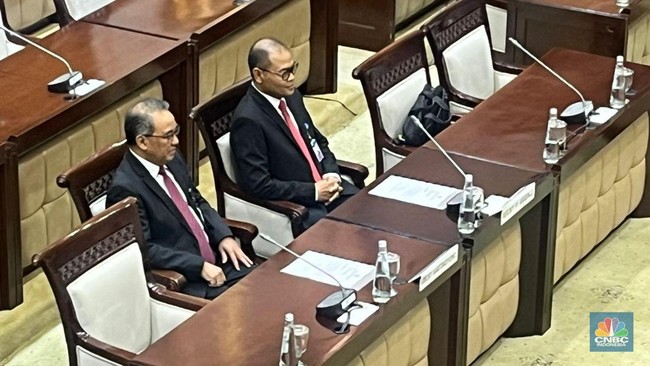
Indonesian Economy Continues to Decline, Lowest in Decades.

Because he is a government official, he refrained from stating the obvious criticisms against the administration which he is also part of it. The obvious reasons:

- Ongoing corruption and the unrelenting exploitation and plundering of the country's natural resources and other assets.

- Concerns surrounding Danantara, Indonesia's sovereign wealth fund, particularly regarding its leadership, which lacks integrity. Aspiring to make Danantara resemble institutions like Temasek, GIC, ADIA, KIA, or PIF seems unrealistic given the prevailing corrupt practices and the people who manage the fund with full autonomy.

- Inefficiency within the government. Notably, the current cabinet has the highest number of ministers in Indonesia’s history, which may be a result of political patronage rewarding allies who supported the rise to power.

- The free meal program for children and pregnant women (MBG) that have taken so many resources and funding thre times more than previously budgeted. Also it overlooks other pressing issues that require more urgent attention, such as program that will have impact to a wider community such addressing extreme poverty. garbage processing center, preventing flood, job creation, etc. I understand that @Shadrach may disagree with this view and might respond critically. :D :D :D :D However, this is my personal opinion, and I'm open to discussion as long as it remains a civilised disucssion.

- others
 
Last edited:
Getting worse now ?

This is an article from CNBC Indonesia the Head of the Payment System Policy Department at Bank Indonesia, reports that Dicky Kartikoyono, stated that Indonesia's economic growth is at its lowest in decades, specifically since the 1970s.
He noted that past growth was fueled by the oil boom and the manufacturing industry, but the country now faces potential stagnation with growth rates of 4-5%. Kartikoyono also mentioned that Indonesia's competitiveness is only at a "moderate" level. To address these challenges, Bank Indonesia is collaborating with various government bodies and is working to lower the benchmark interest rate, which was 5.5% at the time of the statement, while the BI Rate for April 2025 was 5.75%. The recent data from the Central Statistics Agency (BPS) announced that the Indonesian economy grew by 5.12% in the second quarter of 2025.

Indonesian Economy Continues to Decline, Lowest in Decades.

Because he is a government official, he refrained from stating the obvious criticisms against the administration which he is also part of it. The obvious reasons:

- Ongoing corruption and the unrelenting exploitation and plundering of the country's natural resources and other assets.

- Concerns surrounding Danantara, Indonesia's sovereign wealth fund, particularly regarding its leadership, which lacks integrity. Aspiring to make Danantara resemble institutions like Temasek, GIC, ADIA, KIA, or PIF seems unrealistic given the prevailing corrupt practices and the people who manage the fund with full autonomy.

- Inefficiency within the government. Notably, the current cabinet has the highest number of ministers in Indonesia’s history, which may be a result of political patronage rewarding allies who supported the rise to power.

- The free meal program for children and pregnant women (MBG) that have taken so many resources and funding thre times more than previously budgeted. Also it overlooks other pressing issues that require more urgent attention, such as program that will have impact to a wider community such addressing extreme poverty. garbage processing center, preventing flood, job creation, etc. I understand that @Shadrach may disagree with this view and might respond critically. :D :D :D :D However, this is my personal opinion, and I'm open to discussion as long as it remains a civilised disucssion.

- others
Hey my friend, If you think taking food away from Women and Children is a good idea, You are free to have that opinion! I am not one to judge. I am all for solutions to fix these problems.
And I find it interesting you would think of what my opinion is? Why mention me, and not other members? 👍🙏
P.S. please stick to the subject, and don't mention my name. Thank you🤷🏼‍♂️
 
Last edited:
Hey my friend, If you think taking food away from Women and Children is a good idea, You are free to have that opinion! I am not one to judge.
No food is being taken away from women and children. You can only claim something is taken from you if it rightfully belongs to you or you've earned it. This issue should not ignore basic human rights. Furthermore, this program has already consumed significant resources and funding, resources that could have addressed more urgent priorities. The cost has now almost tripled compared to initial estimates. These children and pregnant women are not facing hunger. But what about the children who can't attend school because they have to work? What about the homeless families struggling to find their next meal? And those who have lost their homes and livelihoods due to floods that has happened almost every single year ?? Certainly, providing free meals for children is beneficial, as long as it is well-planned with an effective distribution system to prevent misuse by adults, has sufficient allocated funding to fund the program without overstretching the state budget to ensure other programs are not neglected.

But what happen to free meal program ?? It has only run for a few months and there are already food poisoning outbreaks, and the cost of doing that already almost triple. This unexpected increase of this free meal program has taken away the budget needed for other departments.The educational budget is already the highest in the state budget even before this free meals program, so what happen is that they will need to cut the budget for other programs. And currently the state budget already has a deficit of Rp21T.

I am all for solutions to fix these problems.
You might think you are tying to fix the problem but what problem are you really trying to fix if the discussion in this forum is not read by the decision maker ? Did the Indonesian government ever ask someone in this forum to find solution, fix the problem ?.

Also keep in mind the decision makers in a country have an army of experts. Why would they want to listen the opinion of random people on the internet ?
 
Last edited:
Indonesia's economic growth is at its lowest in decades, specifically since the 1970s.
He noted that past growth was fueled by the oil boom and the manufacturing industry, but the country now faces potential stagnation with growth rates of 4-5%

Screenshot_20250806_053046_SamsungInternet_copy_600x1300.jpg


Screenshot_20250806_053156_SamsungInternet_copy_600x1300.jpg


One has to be carefull when using growth %.
When the growth increases by a fix number per year, the growth % will look like slowly declining.
Imagine you have a business. You first month your sales are 1000, the second month you realize 2000. A 100% income increase.
Now the 3rd mont your sales increase again by 1000, now you are at 3000. But that's only a 50% increase vs the previous month.
The 4th month you increase again your sales by 1000, now you are at 4000.
But the 1000 increase vs the previous month is only 33% !

China had the the same thing. In the 90' they had double digit growth, now it is around 5%.

Anyway most Western "developped" countries would dream about a 4 or 5% GDP growth. Most of them are between 0 and 1% !

Note : the above charts are a bit off as they are in USD, and so the exchange rate fluctuations will have impacted it.

Blaming corruption is wrong as it existed (and worse) in the past.
 
View attachment 5123

View attachment 5124

One has to be carefull when using growth %.
When the growth increases by a fix number per year, the growth % will look like slowly declining.
Imagine you have a business. You first month your sales are 1000, the second month you realize 2000. A 100% income increase.
Now the 3rd mont your sales increase again by 1000, now you are at 3000. But that's only a 50% increase vs the previous month.
The 4th month you increase again your sales by 1000, now you are at 4000.
But the 1000 increase vs the previous month is only 33% !

China had the the same thing. In the 90' they had double digit growth, now it is around 5%.

Anyway most Western "developped" countries would dream about a 4 or 5% GDP growth. Most of them are between 0 and 1% !

Note : the above charts are a bit off as they are in USD, and so the exchange rate fluctuations will have impacted it.

Blaming corruption is wrong as it existed (and worse) in the past.

Because, the economic Growth and GDP growth are two different things. While they are closely related, they are not exactly the same. GDP growth is Purely quantitative measures the total value of all goods and services produced within a country during a specific period.

Economic Growth is referring to broader term which also include GDP growth, productivity, efficiency of the institutions. The current number of minister cabinets, free meal program, the formation of Danantara, a state budget deficit of Rp21T can not be considered as efficient and productive.
 
Last edited:
conomic Growth is referring to broader term which also include GDP growth, productivity, a more More efficient institutions. The current number of minister cabinets, free meal program, the formation of Danantara, a state budget deficit of Rp21T can not be considered as efficient and productive.
Give it time, in many domains the country is still in development stage...
Take the banks, in an era when people want pay with their phones, QR codes etc... the smallest visit to a bank branch will take minimum an hour an 5 forms to fill.
A sovereign wealth fund is very good, if well managed. Norway, SGP being 2 examples.
The free meal program is an ideologic debate.
Same as for Americans our French Social Security, jobless compensation and pension system can be seen as "socialist".

There was a time we served free wine to school kids at lunch....
"In the past, particularly until the 1950s, it was a common practice in France for schoolchildren to be served wine during their lunch breaks. This practice was deeply rooted in French culture, where wine was a regular part of daily life. The wine was typically diluted with water and children were allowed a limited amount, often up to four small glasses. This tradition ended in 1956 when the French government banned the serving of alcohol to children under 14 in schools"

They banned it when I was 3 years old....😡😡

State budget deficit....
Not sure the US or France are in a position to critizise....
😡
 
The government officially reported Indonesia's Poverty and Unemployment Rates HAVE DECLINED.

https://www.cnnindonesia.com/ekonom...a-kemiskinan-dan-pengangguran-indonesia-turun.

https://www.tempo.co/ekonomi/prabowo-klaim-angka-pengangguran-menurun-apa-kata-pengamat--2052048

About unemployment rate, Just look the the reality on the ground in the previous post especially post #45, #46. Also it is reported in the news almost on daily bases about mass redundancy and how difficult for people to get job nowadays.

About poverty figure, well if you want to make the statistics look good just provide your own new definitions of Poverty. In Indonesia, people in poverty is now defined ass those earn Rp20k a day (So Rp600k pm) according to BPS (central bureau of statistics).

However, when presenting the minimum wage to appear favorable in terms of labor protection before the international community, they cite a completely different figure of IDR 5,396,761.00 per month (in Jakarta). Keep in mind minimum wage is legally binding and how many people get paid less than that ?. .Certainly, there is a distinction between the minimum wage and the poverty line, but with such a big difference, anyone with common sense can easily see that the figure is deliberately being manipulated to look good.


I would not place the blame on the Indonesian president, as he merely receives reports from political sycophants the head of BPS (National Bureau of Statistics), who manipulate the figures to please him.
 
Last edited:
However, when presenting the minimum wage to appear favorable in terms of labor protection before the international community, they cite a completely different figure of IDR 5,396,761.00 per month (in Jakarta). Keep in mind minimum wage is legally binding.Certainly, there is a distinction between the minimum wage and the poverty line, but with such a big difference, anyone with common sense can easily see that the figure is deliberately being manipulated to look good.
UMR-minimum salary, is not applied to small and medium businesses (up to 15 billion revenue per year). They follow other scale where the minumum is 1,6-2 million per month. And small and medium companies employ 97% of the total workforce.
 
Last edited:
UMR-minimum salary, is not applied to small and medium businesses (up to 15 billion revenue per year). They follow other scale where the minumum is 1,6-2 million per month. And small and medium companies employ 97% of the total workforce.
And how many countries out there will set the minimum wage based on the size of the employers ??
Also if I remember correctly, while SME is exempted from paying standard minimum wage, they should not be paid lower than 50% of the lowest wages from employees in the same position.

So if the minimum wage in Jakarta is IDR 5,396,761.00 per month, employer, even an SME are not to pay their employees lower than IDR2.69m pm.
 
Last edited:
And how many countries out there will set the minimum wage based on the size of the employers ??
Also if I remember correctly, while SME is exempted from paying standard minimum wage, they should not be paid lower than 50% of the lowest wages from employees in the same position.

So if the minimum wage in Jakarta is IDR 5,396,761.00 per month, employer, even an SME are not to pay their employees lower than IDR2.69m pm.
They should not be paid less than 50% of average monthly consumption in respective province. In Jakarta that salary amount is 1.265.000 per month. So that would be the minimum salary for 97% of all employees (if we assume that Jakarta has the highest paid workers in Indonesia).
 
They should not be paid less than 50% of average monthly consumption in respective province. In Jakarta that salary amount is 1.265.000 per month. So that would be the minimum salary for 97% of all employees (if we assume that Jakarta has the highest paid workers in Indonesia).
I wonder, where does the figure Rp1.265.000 pm come from ?? Is it in Jakarta ????????
That figure is interesting, considering super rich in Indonesia are concentrated in Jakarta where the living cost is the most expensive in Indonesia. Also keep in mind you are talking about 'average' not 'mean' so it is not based on sampling. All of these super rich people, business people monthly consumption, eating out, business luncheon, dining in exclusive, gourmet restaurants need to be counted to arrive to average figure.

Also Not according to AI and this
1754934935602.png


Also according to AI
1754934994960.png

Even live in domestic helper (not even SME or Micro company) get paid more than IDR 1.265.000 per month in Jakarta. Average student living cost in Jakarta is already more than Rp3m.
 
Last edited:
Beside the the government controversial statistics regarding Poverty and Unemployment Rates post #67, now in the the spotlight is Indonesian economic growth which is reported by BPS to grow at 5.12%.


An institution the Center of Economics and Law Studies (Celios) requesting the United Nations (UN) to audit Indonesia's Central Statistics Agency (BPS) regarding its reported 5.12% economic growth in Q2 2025. Celios believes this data doesn't align with the real economic conditions.

Screenshot 2025-08-12 000046.jpg


This is in contrast with the PMI (Purchasing Managers' Index) in the manufacturing sector an economic indicator that measures the health of a country's manufacturing sector which is in decline
Screenshot 2025-08-12 000612.jpg

Celios's estimation suggests that BPS may have deviated from six out of ten fundamental principles of official UN statistics, particularly concerning data transparency, independence, and the use of appropriate international methodologies.
 
Last edited:
I wonder, where does the figure Rp1.265.000 pm come from ?? Is it in Jakarta ????????
That figure is interesting, considering super rich in Indonesia are concentrated in Jakarta where the living cost is the most expensive in Indonesia. Also keep in mind you are talking about 'average' not 'mean' so it is not based on sampling. All of these super rich people, business people monthly consumption, eating out, business luncheon, dining in exclusive, gourmet restaurants need to be counted to arrive to average figure.

Also Not according to AI and this
View attachment 5138

Also according to AI
View attachment 5139
Even live in domestic helper (not even SME or Micro company) get paid more than IDR 1.265.000 per month in Jakarta. Average student living cost in Jakarta is already more than Rp3m.
The amount is for Jakarta area, for references you can find them on internet (minimal salary is 50% of the average consumption and 25% above poverty level for respective province).


It does not mean that people are getting salaries of 1,something million, but it means that salaries are in the zone of 2-3 million much more than we think. Out of Jakarta even less, and small and medium businesses are employing 97% of the population's workforce.

Be aware that super rich people are 1% of the 1%, and that Indonesia is 2nd poorest country in ASEAN, with poverty level of 60+ percent.
 
The amount is for Jakarta area, for references you can find them on internet (minimal salary is 50% of the average consumption and 25% above poverty level for respective province).


It does not mean that people are getting salaries of 1,something million, but it means that salaries are in the zone of 2-3 million much more than we think. Out of Jakarta even less, and small and medium businesses are employing 97% of the population's workforce.

Be aware that super rich people are 1% of the 1%, and that Indonesia is 2nd poorest country in ASEAN, with poverty level of 60+ percent.
We already know that SMEs are legally allowed to pay employees below the minimum wage, which is of IDR 5,396,761 per month in Jakarta. However, you quoted IDR 1,265,000 per month, based on the idea of “at least 50% of the average community consumption.” This is the disputed figure, as even if you applied that principle, the calculation would result in a much figure higher than IDR 1,265,000 if we are talking about Jakarta.

While the link you shared confirms that SMEs can pay less than the minimum wage that we already know, but it does not verify the figure you mentioned. In contrast, the link I referenced in Post #71 suggests otherwise.

For comparison, live-in maids, personal/family driver in Jakarta earn more than IDR 1,265,000 per month, and they are not even employed by SMEs or micro-enterprises. Many people work as factory workers employed by SME industrial area, around Jakarta they get paid higher than this.

The figure you quoted may only make sense if someone is working at SME part-time for just 1-2 weeks (say) a month, paid on a pro-rata basis you might end up with this figure, but it is certainly not representative of a full monthly salary.

So until you could prove or provide as source that you could legally pay someone as low as IDR 1,265,000, in Jakarta. I do not think paying someone with this amount will be legal in Jakarta.
 
Last edited:
We already know that SMEs are legally allowed to pay employees below the minimum wage, which is of IDR 5,396,761 per month in Jakarta. However, you quoted IDR 1,265,000 per month, based on the idea of “at least 50% of the average community consumption.” This is the figure I dispute as even if you applied that principle, the calculation would result in a figure higher than IDR 1,265,000.

While the link you shared confirms that SMEs can pay less than the minimum wage that we already know, but it does not verify the figure you mentioned. In contrast, the link I referenced in Post #71 suggests otherwise.

For comparison, live-in maids in Jakarta earn more than IDR 1,265,000 per month, and they are not even employed by SMEs or micro-enterprises. Many people work as factory workers employed by SME industrial area, around Jakarta they get paid higher than this.

The figure you quoted may only make sense if someone is working at SME part-time for just 1-2 weeks (say) a month, paid on a pro-rata basis you might end up with this figure, but it is certainly not representative of a full monthly salary.

So until you could prove or provide as source that you could legally pay someone as low as IDR 1,265,000, in Jakarta. I do not think paying someone with this amount will be legal in Jakarta.


You can read the article in the link. The article mentions the number 1.265.000 Rp per month and reference for government regulations "misalnya, di DKI Jakarta, upah minimum yang sesuai bisa mencapai Rp1.265.000 per bulan" .

Average montly costs and poverty line are published yearly per province by the BPS. Government regulations PP No. 36 Tahun 2021 dan Perppu No. 2 Tahun 2022., referred in the article give a minimum of 50% of average consumption and 25% above poverty line.
 

You can read the article in the link. The article mentions the number 1.265.000 Rp per month and reference for government regulations "misalnya, di DKI Jakarta, upah minimum yang sesuai bisa mencapai Rp1.265.000 per bulan" .

Average montly costs and poverty line are published yearly per province by the BPS. Government regulations PP No. 36 Tahun 2021 dan Perppu No. 2 Tahun 2022., referred in the article give a minimum of 50% of average consumption and 25% above poverty line.
I miss that part in the first read. I could see it now where you are coming from. But we already know that it is not uncommon that BPS will produce statistic whatever their boss want to hear. Also in the article above there is no reference to BPS report, although I have no reason to doubt that the writer must have that data.

There are many instances where BPS are acting as political sycophants and will produce national statistics whatever their bosses want to hear such as using a different figure of an income of Rp20k a day (or Rp600k pm) to define people in poverty line so the government could claim the poverty has been reduced. It is the same with when presenting the data for economic growth and the unemployment rate so the new government could now claim that the economy is growing and the unemployment rate has been reduced since they take office.

People could easily see they might be using the figure of of monthly salary Rp1.265.000 pm in Jakarta when claiming the unemployment rate but use a different figure, the minimum wage of IDR 5,396,761.00 per month when the figure is presented to the UN, world bank and other international labor community to look good. Also they mention the calculation method in the regulation when an SME want to pay below minimum wage but they leave it ambiguous and let the sycophants in BPS to do the dirty job of manipulating the calculation to arrive to the figure their bosses want to see.

But anyone understand the issue of economic growth, unemployment figure could easily see that this is not reflected with the reality on the ground (post #67) and those claims are heavily disputed by many scholars and other organizations (post #72). The political sycophants in BPS appear to have no shame, blatantly presenting figures that even an ordinary person with basic common sense could easily spot it.
 
Last edited:
Ironical ?
Without housing allowances , DPR (Parliament) members' salaries can reach Rp230m pm. It's no wonder the people are rebelling.


Now, compare this to the previous standard for classifying someone as living in poverty, such as earning Rp20k per day (Rp60k pm), which allowed the government to claim that poverty had decreased.
 
Last edited:
How many people have lost their jobs? This includes employees working inside the mall, nearby street vendors, as well as workers employed by the suppliers and distributors that serve these vendors and this mega mall.


Grand Mall Bekasi is closed, What About the Surrounding Vendors?

Does anyone still seriously believe the official statistics from BPS (Indonesia’s Central Statistics Agency) claiming that unemployment has recently decreased? It seems the people working there might just be political sycophant who will produce whatever numbers their superiors want to see.
 
The official Statistics of the Indonesian Government (BPS) defines Middle Class (e.g Middle income spender) as people who spend Rp 2.04m+ (e.g USD125). :D:D:D:D
So how do you define people, diaspora living in Indonesia who spend USD1,000,000 to purchase property in Indonesia as discussed in this thread?
 
Last edited:

Users who viewed this discussion (Total:0)

Follow Us

Latest Expat Indo Articles

Latest Tweets by Expat Indo

Online Now

No members online now.

Forum Statistics

Threads
6,579
Messages
110,598
Members
3,867
Latest member
Avery Kate
Back
Top Bottom