Nasi Goreng Recipe Variations: Seeking Authenticity

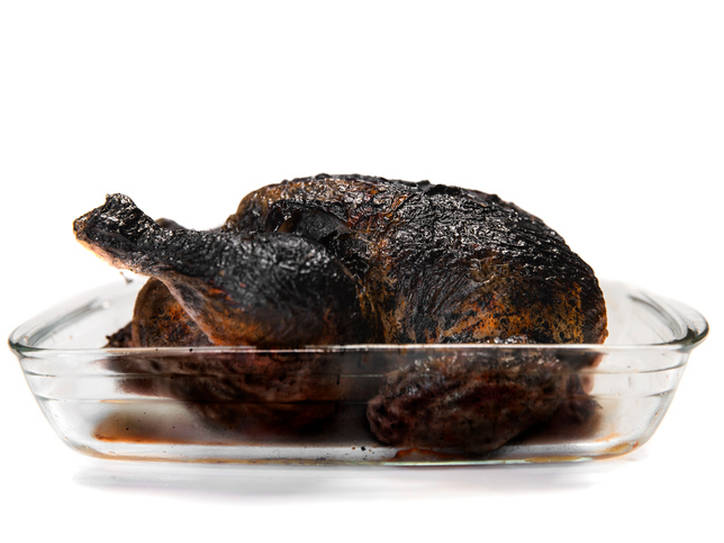
It burned and so it is now burnt
To burn. Burning. Burned. And now it has become burnt
Verb. Adjective.
 
Not burned... called "Socarrat" by certain experts it seems.

But yes my dear, basically you are right !

But don't try to serve me burned / burnt rice !
The socarrat in paella is one of the most important keys for fabulous flavor. The socarrat is the crusty crispy bottom of the paella that becomes caramelized and toasted on the bottom of the pan when it is cooking. The crust on the bottom can be made in two ways.

First, when the rice is almost finished cooking, take the pan with the paella off of the heat and let the rice absorb the remaining water. This will let the rest of the rice continue to cook while the heat from the bottom of the pan creates a crust.

The second way to obtain the crust is to use a very high flame to cook the bottom of the rice. You must carefully watch the paella cook though because it can easily burn.


I wonder though one should eat the socarrat? I never did.

Funny though, that in bahasa Indonesia "crust" is "kerak" ... sound like "so-carrat".
 
Last edited:
Second thought, if I like the crust (I don't), it likes eating rice and the almost-rice crackers together :)
I like Japanese senbei and Indonesian krupuk puli. I don't like Indonesian rengginang. Not sure about krupuk gendar.
 
Finding the true essence of "Nasi Goreng" may be quite a challenge. "Nasi Goreng" is simply "fried rice". So in my opinion any stir-fried rice on the wok, pan will qualify to be called as Nasi Goreng. Any recipe for fried rice will involve stir-frying cooked rice and infusing it with flavors.

Fundamental to Indonesian cuisine are seasoning like salt, onion, and garlic. They could then be added with "terasi" (shrimp paste), eggs, prawn, chicken, pork & Sausages (Typically Indonesian Chinese fried rice) to get different flavours.
In Java, dark sweet soy sauce is likened, so this sauce is added in the ingredients. Similarly Indonesian Chinese like red tomato sauces and chilli sauce so this sauce is added.
On top of that, various vegetables are added, including Chinese cabbage, pakchoy (bok choy), kailan, mustard greens, etc.

To elevate the dish and impart an Umami flavor, additional seasonings are incorporated. Whether you're enjoying Nasi Goreng in Indonesia or elsewhere in Asia, it's highly likely that they use "msg" nowadays to enhance the umami taste. Good luck in your quest for authentic Nasi Goreng!
 
Last edited:
No pakchoi. Too watery
It is possible to use it in its raw, uncooked form, much like how romaine lettuce, cucumber, and tomato are utilized as salads and for decoration in 'nasi goreng'. However, this particular type of "nasi goreng" is considered somewhat exclusive and is not typically offered by street vendors, mainly due to the additional cost of incorporating these salads into the overall price of the 'nasi goreng.'

nasi-goreng-kecap-foto-resep-utama.jpg
 
I'll second @pantaiema's response. Nasi goreng in Indonesia most likely (mainly because I haven't tried Nasi goreng from all over Indonesia) have different styles.

The style in Jakarta is quite distinct though I find, in the use of sweet soy sauce and sometimes terasi on top of the usual garlic/shallot/chilli paste. Some also used ground hebi (dried shrimps) for a distinct umami kick. If chicken is used, it's shredded cooked chicken that may also have been marinated in turmeric (not always). Most of the time no vegetables are used, just spring onion at the end with fried shallots and maybe coriander as garnish.

The above is my experience eating from the abang2 trolleys selling mie tektek and/or fried rice in Jakarta.
 
I don't know who invented the sausages made here in Indonesia? They are pale, bland, made with chicken and no spices! What evr happened to the krupuk Udang? What I have seen and tasted now is a sad tasteless reflection of the ones from twenty years ago! Can anyone explain why pork has become taboo? Not just because its tradition but why was it made taboo?
 
I don't know who invented the sausages made here in Indonesia? They are pale, bland, made with chicken and no spices!
The sausages here seem to be made according to the homeopathic law of infinitesimal dose; the greater the dilution the greater its potency.
 
I don't know who invented the sausages made here in Indonesia? They are pale, bland, made with chicken and no spices! What evr happened to the krupuk Udang? What I have seen and tasted now is a sad tasteless reflection of the ones from twenty years ago! Can anyone explain why pork has become taboo? Not just because its tradition but why was it made taboo?
Taboo? I thought it's 'haram'? Pork products can't be sold to the Moslem-majority public. You're more likely to find them in Chinese areas Jakarta Barat and Utara
 
IMO it is hard to find authentic recipe for Indonesian Nasi Goreng (if any) as such kind of original recipe known in the early days is not well documented and preserved.

This Cak Yono's Nasi Goreng stall in Surabaya gets public attention.

Madness !!! Rp11k giant portion Nasi Goreng. People are queuing to buy.
 
Last edited:
IMO it is hard to find authentic recipe for Indonesian Nasi Goreng (if any) as such kind of original recipe known in the early days is not well documented and preserved.

This Nasi Goreng stall in Surabaya gets public attention.

Madness !!! Rp11k giant portion Nasi Goreng. People are queuing to buy.
What's that white stuff which he scoops from a round container held in his hand with a blue tea towel? (1min50 secs) It can't be salt as he scoops quite a lot of whatever it is into the wok?
 
Last edited:
What's that white stuff which he scoops from a round container held in his hand with a blue tea towel? It can't be salt as he scoops quite a lot of whatever it is into the wok?

I think many people including people who bought this 'nasi goreng', know that it is MSG. Like many Asian cuisines, Indonesian cuisine heavily relies on the umami taste, to get a pleasant savoury flavour. In the high-end eateries, the majority of this umami flavour might come from seafood, pork, chicken, lamb, sausage, mushrooms, seaweeds, etc. In the absence of these meaty ingredients, they will rely on eggs, and the rest will come from MSG.

In Indonesia, people get used to umami taste coming from MSG during their childhood, as evidenced by the widespread popularity of instant noodles.
 
Last edited:
I just watched a video on street stalls in Bangkok, and the cooking quality level was much higher. When they made Nasi Goreng, they added much more vegetables, eggs, and less MSG! They also used Udang, which made it look very delicious. Definitely Thai People cook with more spices and fresh veggies, and seafood and different meats. It's too bad their style of cooking didn't come south to Indonesia. They even put a plate of free veggies and fresh herbs on the table when you order a meal at restaurants! Ajinomoto was originally derived from the salts on seaweed! Since all of Indonesia is surrounded by the sea, it would make sense to use more seaweed, miso, coconut milk, chocolate, avocados, and koji! Ceviche is nice also! Indonesia could learn a lot from other countries on how to use what is available here to broaden the range of delicious dishes!
 
I just watched a video on street stalls in Bangkok, and the cooking quality level was much higher. When they made Nasi Goreng, they added much more vegetables, eggs, and less MSG! They also used Udang, which made it look very delicious. Definitely Thai People cook with more spices and fresh veggies, and seafood and different meats. It's too bad their style of cooking didn't come south to Indonesia. They even put a plate of free veggies and fresh herbs on the table when you order a meal at restaurants! Ajinomoto was originally derived from the salts on seaweed! Since all of Indonesia is surrounded by the sea, it would make sense to use more seaweed, miso, coconut milk, chocolate, avocados, and koji! Ceviche is nice also! Indonesia could learn a lot from other countries on how to use what is available here to broaden the range of delicious dishes!
Fully agreed. I lived 10 years in BKK, and there was plenty Thai food I could eat, and tasted very good. (Well, except for the Issan stuff).
Here, in 6 years I never touched the local stuff.
And no way I would touch that thing in the video...
 
But thats not Nasi Goreng is it?
If it's in Bangkok. That's shrimp fried rice or whatever they call it there

Its like saying in Madrid they add more seafood and cook it in a shallow pan

Btw Paella is the name of that pan. Not the actual dish
 
But thats not Nasi Goreng is it?
If it's in Bangkok. That's shrimp fried rice or whatever they call it there

Its like saying in Madrid they add more seafood and cook it in a shallow pan

Btw Paella is the name of that pan. Not the actual dish
Nasi goreng is simpky fried rice....
You find it all over Asia.
Here they just gave it fancy name !

the way we make it :

Screenshot_20230922-122131_Gallery_copy_1024x576.jpg


Mixed vegetables, beans, bacon,....or beef. And Nasi Goreng sauce.
BTW, it's much better with Basmati rice !
 
Last edited:

Users who viewed this discussion (Total:0)

Follow Us

Latest Expat Indo Articles

Latest Tweets by Expat Indo

Online Now

No members online now.

Newest Members

Forum Statistics

Threads
6,596
Messages
110,880
Members
3,881
Latest member
Nina
Back
Top Bottom