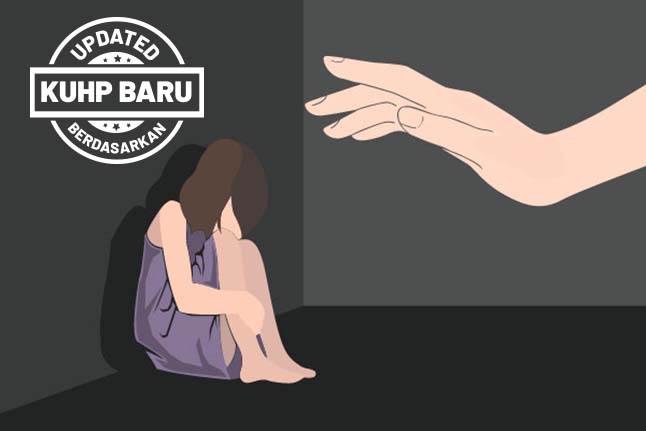
Indonesia set to introduce strict new law banning sex outside of marriage

As I'm sure you know the vast vast majority of users of commercial sex services in Indonesian are actually Indonesian.
So what?

If the new laws have a negative impact on foreign sex tourism, regardless of how large or small this group of tourists currently is, then this is a good thing imho.
 
When it comes to notions of morality it seems that countries where religious taboos are predominant then sex outside marriage tends to be seen as improper and sinful. I don't think it unfair to say that as a basically Islamic nation Indonesia has a stricter sense of what is proper when it comes to sexual behaviour than in countries where religion no longer holds the kind of power and influence as had been the case last century. Perhaps the majority of international tourists come from countries where sexual behaviour is not seen in this same puritanical light.

We might reasonably think that many younger couples and even mature age couples who visit Indonesia are not as yet committed to the need to marry but who see sexual intimacy as a natural and normal behaviour. Even though the laws may not come into effect for another three years (or maybe not at all ) perhaps most people would tend to feel uncomfortable where their "normal" behaviour is going to be regarded as unsuitable let alone being illegal. This seems bound to effect choices being made as to Indonesia being a preferred tourist destination.

The other important issues of limiting free speech in relation to commenting on Indonesian institutions are serious matters but given that most visitors are not coming here to engage in political debate then western media is bound to place less scrutiny regarding these laws. That said, there have been many newspaper articles and website pieces where these issues have been given serious and critical analysis.

At the heart of the debate is that these new laws are to bound be seen as a backward step when promotion of issues of personal liberty and choice are increasingly regarded as indications of progressive development. Unfortunately it does not follow that in countries where laws are based on strict religious taboos these societies will be better places to live. Iran and Afghanistan are rather terrible examples of the kind of deeply troubled societies that may develop under increasingly repressive laws regarding human behaviour.
 
In the past this was what the law said:

"Di dalam ketentuan Kitab Undang-Undang Hukum Pidana (“KUHP”), tidak ada pasal yang dapat digunakan untuk menjerat pengguna PSK maupun PSK itu sendiri. Ketentuan KUHP hanya dapat digunakan untuk menjerat penyedia PSK/germo/muncikari berdasarkan ketentuan Pasal 296 jo. Pasal 506 KUHP:

Pasal 296
Barang siapa yang mata pencahariannya atau kebiasaannya yaitu dengan sengaja mengadakan atau memudahkan perbuatan cabul dengan orang lain diancam dengan pidana penjara paling lama satu tahun empat bulan atau pidana denda paling banyak lima belas ribu rupiah.[1]"

Translation:
In the provisions of the Criminal Code (“KUHP”), there are no articles that can be used to ensnare people who purchase sex or prostitutes themselves. Provisions of the Criminal Code can only be used to ensnare prostitutes/pimps/pimps pursuant to the provisions of Article 296 jo. Article 506 of the Criminal Code:

Article 296
Any person whose means of livelihood or habit is that of deliberately committing or facilitating obscene acts with another person, shall be subject to a maximum imprisonment of one year and four months or a maximum fine of fifteen thousand rupiahs.[1]

"R. Soesilo dalam bukunya Kitab Undang-Undang Hukum Pidana (KUHP) Serta Komentar-Komentarnya Lengkap Pasal Demi Pasal (hal. 217) menjelaskan bahwa pasal ini gunanya untuk memberantas orang-orang yang mengadakan bordil atau tempat-tempat pelacuran. Supaya dapat dihukum harus dibuktikan bahwa perbuatan itu menjadi pencahariannya atau kebiasaannya.

Pasal 506
Barang siapa sebagai muncikari (souteneur) mengambil keuntungan dari pelacuran perempuan, diancam dengan pidana kurungan paling lama satu tahun.

Soesilo (hal. 327) menjelaskan bahwa muncikari adalah makelar cabul, yakni seorang laki-laki yang hidupnya seolah-olah dibiayai oleh pelacur yang tinggal bersama-sama dengan dia yang dalam pelacuran menolong, mencarikan langganan-lagganan dari mana ia mendapat bagiannya."

Translation:
R. Soesilo in his book The Criminal Code (KUHP) and its Complete Comments Article by Article (p. 217) explains that this article is intended to eradicate people who hold brothels or places of prostitution. In order to be punished, it must be proven that the act was his livelihood or habit.
Article 506
Any person who as a pimp (souteneur) takes advantage of the prostitution of women, shall be punished by a maximum light imprisonment of one year.
Soesilo (p. 327) explains that pimps are obscenity brokers, namely a man whose life is as if financed by a prostitute who lives with him who helps in prostitution, looking for clients from which he gets his share.

People might see differently if the law was issued in the countries which do not have a sizeblae number of religious extremists, do not have a history where particular group are relentlessly trying to change the constitution, to impose a law which favour particular religions. A few weeks ago before the laws was passed there were a few people saying it would not be approved. Just see what happen now. When the thing keep moving forward without stopper people could easily predict where they will end up. That is where the countries like Iran and Afghanistan have turned to the country where we see now.

 
Last edited:
When it comes to notions of morality it seems that countries where religious taboos are predominant then sex outside marriage tends to be seen as improper and sinful. I don't think it unfair to say that as a basically Islamic nation Indonesia has a stricter sense of what is proper when it comes to sexual behaviour than in countries where religion no longer holds the kind of power and influence as had been the case last century. Perhaps the majority of international tourists come from countries where sexual behaviour is not seen in this same puritanical light.

We might reasonably think that many younger couples and even mature age couples who visit Indonesia are not as yet committed to the need to marry but who see sexual intimacy as a natural and normal behaviour. Even though the laws may not come into effect for another three years (or maybe not at all ) perhaps most people would tend to feel uncomfortable where their "normal" behaviour is going to be regarded as unsuitable let alone being illegal. This seems bound to effect choices being made as to Indonesia being a preferred tourist destination.

The other important issues of limiting free speech in relation to commenting on Indonesian institutions are serious matters but given that most visitors are not coming here to engage in political debate then western media is bound to place less scrutiny regarding these laws. That said, there have been many newspaper articles and website pieces where these issues have been given serious and critical analysis.

At the heart of the debate is that these new laws are to bound be seen as a backward step when promotion of issues of personal liberty and choice are increasingly regarded as indications of progressive development. Unfortunately it does not follow that in countries where laws are based on strict religious taboos these societies will be better places to live. Iran and Afghanistan are rather terrible examples of the kind of deeply troubled societies that may develop under increasingly repressive laws regarding human behaviour.
I think it's more accurate to say 'as a religious nation' rather than 'as a basically Islamic nation'. Don't forget that Indonesians tend to take their religion seriously regardless of creed. The new code also criminalizes behavior which has nothing to do with religion. I'd point to authoritarians rather than Islamists as the source of the issue.
Anyway chances are that feedback from the public will result in changes to the code.
 
In the past this was what the law said:

"Di dalam ketentuan Kitab Undang-Undang Hukum Pidana (“KUHP”), tidak ada pasal yang dapat digunakan untuk menjerat pengguna PSK maupun PSK itu sendiri. Ketentuan KUHP hanya dapat digunakan untuk menjerat penyedia PSK/germo/muncikari berdasarkan ketentuan Pasal 296 jo. Pasal 506 KUHP:

Pasal 296
Barang siapa yang mata pencahariannya atau kebiasaannya yaitu dengan sengaja mengadakan atau memudahkan perbuatan cabul dengan orang lain diancam dengan pidana penjara paling lama satu tahun empat bulan atau pidana denda paling banyak lima belas ribu rupiah.[1]"

Translation:
In the provisions of the Criminal Code (“KUHP”), there are no articles that can be used to ensnare prostitutes or prostitutes themselves. Provisions of the Criminal Code can only be used to ensnare prostitutes/pimps/pimps pursuant to the provisions of Article 296 jo. Article 506 of the Criminal Code:

Article 296
Any person whose means of livelihood or habit is that of deliberately committing or facilitating obscene acts with another person, shall be subject to a maximum imprisonment of one year and four months or a maximum fine of fifteen thousand rupiahs.[1]

"R. Soesilo dalam bukunya Kitab Undang-Undang Hukum Pidana (KUHP) Serta Komentar-Komentarnya Lengkap Pasal Demi Pasal (hal. 217) menjelaskan bahwa pasal ini gunanya untuk memberantas orang-orang yang mengadakan bordil atau tempat-tempat pelacuran. Supaya dapat dihukum harus dibuktikan bahwa perbuatan itu menjadi pencahariannya atau kebiasaannya.

Pasal 506
Barang siapa sebagai muncikari (souteneur) mengambil keuntungan dari pelacuran perempuan, diancam dengan pidana kurungan paling lama satu tahun.

Soesilo (hal. 327) menjelaskan bahwa muncikari adalah makelar cabul, yakni seorang laki-laki yang hidupnya seolah-olah dibiayai oleh pelacur yang tinggal bersama-sama dengan dia yang dalam pelacuran menolong, mencarikan langganan-lagganan dari mana ia mendapat bagiannya."

Translation:
R. Soesilo in his book The Criminal Code (KUHP) and its Complete Comments Article by Article (p. 217) explains that this article is intended to eradicate people who hold brothels or places of prostitution. In order to be punished, it must be proven that the act was his livelihood or habit.
Article 506
Any person who as a pimp (souteneur) takes advantage of the prostitution of women, shall be punished by a maximum light imprisonment of one year.
Soesilo (p. 327) explains that pimps are obscenity brokers, namely a man whose life is as if financed by a prostitute who lives with him who helps in prostitution, looking for clients from which he gets his share.

People might not be too worry if the law was issued in the countries which do not have a lot of religious extremists, do not have a history of relentlessly trying to change the constitution, try to impose a law which favour particular religions. When the thing keep moving forward without stopper people could easily predict where they will end up. That is where the countries like Iran and Afghanistan have turned to the country where we see now.
Thank you for listing the relevant laws, that's informative.
I think that's an incomplete picture of how Iran and Afghanistan got to their current situations. There's something about the US, UK, and USSR too.
 
Last edited:
At the heart of the debate is that these new laws are to bound be seen as a backward step when promotion of issues of personal liberty and choice are increasingly regarded as indications of progressive development. Unfortunately it does not follow that in countries where laws are based on strict religious taboos these societies will be better places to live. Iran and Afghanistan are rather terrible examples of the kind of deeply troubled societies that may develop under increasingly repressive laws regarding human behaviour.

Using religion to inform a legal framework is ruinous as it is all too rigid. There is no room for improvement or progress as society is perceived to have reached a pinnacle at another point in history. In the case of the Taliban's rule of Afghanistan, they well and truly believe that human governance was perfected in the 7th Century. During their first attempt at running a country, they didn't have a budget or central planning. They simply allocated funds as they could, and hoped for the best. They were excellent rebels, but it takes a different set of skills to rule rather than to rebel.
Secular governance presents a neutral option for Muslims as it places no other religion above Islam.

Indonesia, as a multi-confessional state, presents an option that outwardly appears to give equal protections but ultimately enshrines elements of our shari'a. The two situations are radically different, even if the religion itself is the same. And I think you're aware of that, and most of our readership is aware. Nation states can be dangerous for their citizens regardless of whether or not they contain religious fanatics. The deadliest of the past three centuries is not religion. It's nationalism.

What I'd like to disagree on is the notion that progress is measured in personal liberty. As an American, I am witnessing the steady decline of my nation in the face of ever greater expressions of personal liberty and identity. My opinion is that our decline is informed by our disregard for a cohesive identity. Nation states require the buy in of their people, they require a national identity that revolves around mythic founding figures and an ethnogenesis within their borders. Such a concept is slipping among Americans, and indeed most Western nations, and the reason for that is the "progress" we have made. Our personal freedoms are turning us against one another to some degree.

There's a place in between extreme "progress" (made manifest today in illiberal "liberalism") and extreme traditionalism (a.k.a conservatism). It is a place that, up until recently, most Western nations were good at being close to balancing. Indonesia too is trying to walk that tight rope. I think we all agree that it is off balance right now. The way forward, however, is not progressive the way Westerners perceive it.
 
Last edited:
So what?
If the new laws have a negative impact on foreign sex tourism, regardless of how large or small this group of tourists currently is, then this is a good thing imho.
That debate has been going on for centuries as old as human civilisation. What is for certain here, unless they are religiously bias, there are many (in fact majority) of experts, anthropologists disagree with this statement.
But certainly people will need to respect personal opinion as long as they do not impose their beliefs to other people, who do not believe in this sort of thing.
 
Last edited:
"......The deadliest of the past three centuries is not religion. It's nationalism....."
I won't lose any sleep arguing over this but going back the last three centuries the reality was that probably the majority of people did not identify with the notion of nationhood so much as their attachments related to regional politics and commitment to their masters whose fortunes waxed and waned. On the other hand religions had become entrenched in most parts of the worlds across that three hundred years and the demands and intrigues of religious leaders were the cause of innumerable conflicts and wars often splitting nations into warring factions.
 
Last edited by a moderator:
  • Like
Reactions: LRB
One of the things that points directly at religion and not just based on it in the new law is the honoring of the hundreds of local laws put in place by regional, district, village, and neighborhood leaders. Jokowi tried to eliminate them due to how they obstruct business investments and developments. The Supreme Court said no can do. The vast majority if these laws are based on sariah principles. I can see many more being enacted with the new law. Things like hijabs are mandatory for all female students. High School virginity test for females, and mandatory Islam training and Mosque attendence by all.
 
One of the things that points directly at religion and not just based on it in the new law is the honoring of the hundreds of local laws put in place by regional, district, village, and neighborhood leaders. Jokowi tried to eliminate them due to how they obstruct business investments and developments. The Supreme Court said no can do. The vast majority if these laws are based on sariah principles. I can see many more being enacted with the new law. Things like hijabs are mandatory for all female students. High School virginity test for females, and mandatory Islam training and Mosque attendence by all.

The Indonesian state has difficulty resisting implementation of the shari'a because its national ideology is influenced by the shari'a. It is not a coincidence that a nation with a majority Muslim population has for the first precept of its allegedly multiconfessional state ideology an insistence on tawhid. The challenge here is not the new criminal code. It is far more foundational.
 
That debate has been going on for centuries as old as human civilisation. What is for certain here, unless they are religiously bias, there are many (in fact majority) of experts, anthropologists disagree with this statement.
But certainly people will need to respect personal opinion as long as they do not impose their beliefs to other people, who do not believe in this sort of thing.

I mean, imposition of opinions/beliefs on others is how all societies arrive at their norms and political aims whether or not they're informed by religion. It's personally my belief that a man cannot become a woman and vice versa. I arrived at this conclusion because our sexes are concrete and immutable. I reject the intentional deflection and use of the weasel word gender when what we're talking about are the human sexes. Religion doesn't inform my belief on this issue, biology does.

What I view as being an imposition on myself and my family is viewed as a central human rights struggle by millions of others. My view, as a conservatively minded individual, is that up until about five minutes ago this wasn't really a thing, that even my grade school aged children can reliably explain the difference male and female. Whether or not I, and millions of others like me, am correct is going to be borne out through popular opinion and interpretation of the law over time. I will stand up for my beliefs, they'll stand up for theirs.

Either way, someone is going to impose their ideology on the other. Religion isn't the only ideology in town, and it isn't the sole institution people draw their beliefs from. This kind of friction is normal in a functioning, modern society. Religious groups have every bit as much right to stand up for themselves as the next party.
 
"........ It's personally my belief that a man cannot become a woman and vice versa. I arrived at this conclusion because our sexes are concrete and immutable......."
How then do you regard hermaphrodites, people born with both female and male sexual organs?
The nature of evolution is that there is constant variation in species. There are species of fish and other creatures change sex spontaneously in certain circumstances. As a heterosexual I am not an advocate for homosexual behaviour but recognize that many people are driven to alternative expressions of their sexuality. The view that "our sexes are concrete and immutable" seems to stem from a religious position rather than accepting the realities of the varying conditions of both human and other living creatures.
 
How then do you regard hermaphrodites, people born with both female and male sexual organs?
The nature of evolution is that there is constant variation in species. There are species of fish and other creatures change sex spontaneously in certain circumstances. As a heterosexual I am not an advocate for homosexual behaviour but recognize that many people are driven to alternative expressions of their sexuality. The view that "our sexes are concrete and immutable" seems to stem from a religious position rather than accepting the realities of the varying conditions of both human and other living creatures.

If you're interested in this subject, PM me or we can open a thread in the cage. While I do find this particular issue fascinating, the mods will view it as a deviation from the thread's original topic and insist we keep it on course. And they'd be right. I mentioned it only as a useful example of a hot button issue in allegedly "progressive" nations with clear secular delineations to show that imposition of personal beliefs is not merely the domain of religious groups.
 
Another article, this time about alcohol:
“Setiap Orang yang menjual atau memberi minuman atau bahan yang memabukkan kepada orang yang sedang dalam keadaan mabuk, dipidana dengan pidana penjara paling lama 1 (satu) tahun atau pidana denda paling banyak kategori II,”
"Everyone who sells or gives drinks or intoxicating materials to people who are in a state of intoxication, shall be punished with imprisonment for a maximum of 1 (one) year or a maximum fine of category II."

Since Indonesians also use the word Mabuk to mean dizzy, vertigo and similar, does that mean giving a drink to someone who's feeling dizzy is also a criminal offence?

Also - if i was a waitress at BATS I'd be feeling a bit nervous!
 
I see Jokowi son didn't waste time getting married. Wonder if he stayed the night with her as a bf gf before they officially wed today?
Did they both have virgin testing? I mean if they are not both virgins they should go to jail right? Sex before marriage?
 
Another article, this time about alcohol:
“Setiap Orang yang menjual atau memberi minuman atau bahan yang memabukkan kepada orang yang sedang dalam keadaan mabuk, dipidana dengan pidana penjara paling lama 1 (satu) tahun atau pidana denda paling banyak kategori II,”
"Everyone who sells or gives drinks or intoxicating materials to people who are in a state of intoxication, shall be punished with imprisonment for a maximum of 1 (one) year or a maximum fine of category II."

Since Indonesians also use the word Mabuk to mean dizzy, vertigo and similar, does that mean giving a drink to someone who's feeling dizzy is also a criminal offence?

Also - if i was a waitress at BATS I'd be feeling a bit nervous!

Actually even in UK US etc bartenders can be held responsible to continue serving someone who is already obviously inebriated
 
I mean, imposition of opinions/beliefs on others is how all societies arrive at their norms and political aims whether or not they're informed by religion. It's personally my belief that a man cannot become a woman and vice versa. I arrived at this conclusion because our sexes are concrete and immutable. I reject the intentional deflection and use of the weasel word gender when what we're talking about are the human sexes. Religion doesn't inform my belief on this issue, biology does.

What I view as being an imposition on myself and my family is viewed as a central human rights struggle by millions of others. My view, as a conservatively minded individual, is that up until about five minutes ago this wasn't really a thing, that even my grade school aged children can reliably explain the difference male and female. Whether or not I, and millions of others like me, am correct is going to be borne out through popular opinion and interpretation of the law over time. I will stand up for my beliefs, they'll stand up for theirs.

Either way, someone is going to impose their ideology on the other. Religion isn't the only ideology in town, and it isn't the sole institution people draw their beliefs from. This kind of friction is normal in a functioning, modern society. Religious groups have every bit as much right to stand up for themselves as the next party.
To impose is to force someone to accept something, especially a belief or way of living. A norm is something that is usual, typical, or standard. So it is not a norm to impose your behaviours, values and beliefs on others.

A social norm and a legal norm are two different things. A standard using meter to describe a length is also a norm.
Is this thread about a social norm or legal Norm. Differentiate between norms with causal laws.

The law about sex outside marriage, check in together in an accommodation for unmarried couple is what this thread is all about as I understand. Is jail punishment for check in a hotel or living together for unmarried couple a international norm in society ??

A legal norm (e.g law) is required in the society to run a country. This serves as a norm of conduct for citizens and act as a guidance of acceptable behaviour aiming to protect the general safety, and ensure our rights as citizens against abuses by other people, by organizations, and by the government itself. Many people don't want them that other parties imposing their religious beliefs, religiously based law on them or their children.

It is a general consensus of experts that the state and religion will need to be separated.
 
Last edited:
Indonesia banned all sex out of marriage, meaning much wider than adultery (marriage cheating only).

The list of countries banning pre-marital sex is very short:
Pakistan, Afghanistan, Qatar, Saudi Arabia, Iran, Somalia, Sudan, Malaysia (Muslims only), Philippines. Egypt, Indonesia.
Penalties range from stoning to prison penalties. Iranian (flogging) and Indonesian (money/and or prison penalty) are the most liberal legislations in this group.
 
Interesting to see Philippines on that list. Perhaps people could look to them to see how these things work in practice in this part of the world.
Also, how do you prove adultery without photographic evidence (and if you took photographic evidence you could be prosecuted under the pornography law :ROFLMAO: ).
 

Users who viewed this discussion (Total:0)

Follow Us

Latest Expat Indo Articles

Latest Tweets by Expat Indo

Online Now

Newest Members

Forum Statistics

Threads
6,583
Messages
110,648
Members
3,871
Latest member
Nadiarrr
Back
Top Bottom