

Fossil Fuel subsidies, current state of affairs and impact

From the other thread:

I suppose Jakarta's air quality was never great, but it is now objectively the worst in the world, according to AirVisual.com.

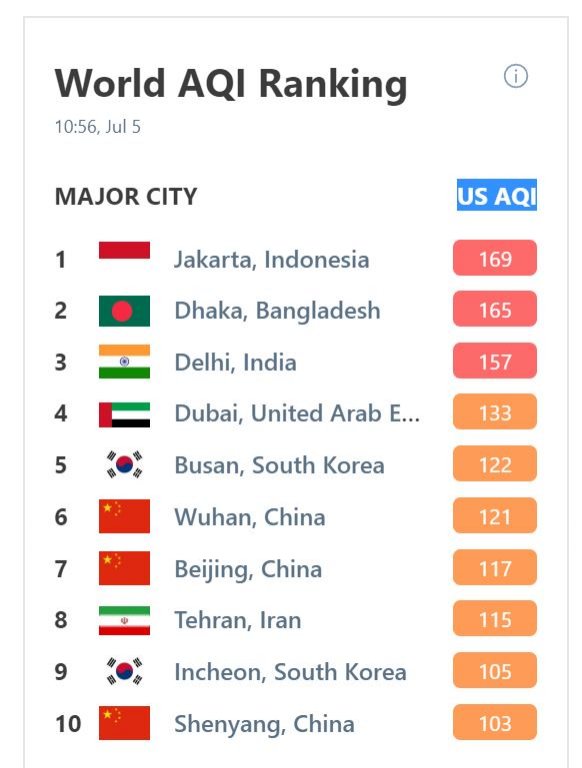
This morning Jakarta tops all major cities in the world, with an air quality index (AQI) at 169 (high numbers are bad). In recent days, Jakarta has even topped 200 on a few occasions. An AQI is measured based on five pollutants: particulate matter (PM), sulphur dioxide, carbon monoxide, nitrogen dioxide, and ozone. Anything above 100 is considered “unhealthy”, while scores over 200 – looking at you, Jakarta – are “very unhealthy”.

Jakarta is followed by Dhaka and Delhi. Beijing, the capital of China, and also famous for it's terrible air quality, is in 7th position.
1094


According to this article, research from the University of Chicago shows that Jakarta’s air quality is now so bad that it’s cutting 2.3 years off the average resident’s lifespan. Also that at least 7,390 Jakartans die early every year due to high levels of PM2.5, with almost 2,000 babies born with low birth weights for the same reason. Out of 44 sub-districts in Jakarta, 16 list “upper respiratory infections” as the top cause of illness.

I suppose Jakarta's air quality was never great, but it is now objectively the worst in the world, according to AirVisual.com.

This morning Jakarta tops all major cities in the world, with an air quality index (AQI) at 169 (high numbers are bad). In recent days, Jakarta has even topped 200 on a few occasions. An AQI is measured based on five pollutants: particulate matter (PM), sulphur dioxide, carbon monoxide, nitrogen dioxide, and ozone. Anything above 100 is considered “unhealthy”, while scores over 200 – looking at you, Jakarta – are “very unhealthy”.

Jakarta is followed by Dhaka and Delhi. Beijing, the capital of China, and also famous for it's terrible air quality, is in 7th position.


1094


According to this article, research from the University of Chicago shows that Jakarta’s air quality is now so bad that it’s cutting 2.3 years off the average resident’s lifespan. Also that at least 7,390 Jakartans die early every year due to high levels of PM2.5, with almost 2,000 babies born with low birth weights for the same reason. Out of 44 sub-districts in Jakarta, 16 list “upper respiratory infections” as the top cause of illness.
 
@Helpful Herbert wrote:

"7,390 Jakartans die early every year due to high levels of PM2.5". I would estimate that many many more than this die early due to smoking, lack of exercise and an unhealthy diet.

Also there is some slightly strange maths going on there. 7,390 people dying early each year (whatever "early" means) does not equate to an average 2-3 years off everyone's lifespan. It's less than 0.1% of the population of Jakarta. Even if they all died 40 years early (eg 36 instead of 76) that's still 99.9% who don't die early each year, so there is no way of getting to an average of 2-3 years over the whole population when 0.1% die early and 99.9% don't. Even over a 10-year period, when 1% die early and 99% don't, I calculate the average change in lifespan would only be a few weeks.

However the pollution has clearly been bad since June, anyone can see that, dodgy stats or not

"7,390 Jakartans die early every year due to high levels of PM2.5". I would estimate that many many more than this die early due to smoking, lack of exercise and an unhealthy diet.

Also there is some slightly strange maths going on there. 7,390 people dying early each year (whatever "early" means) does not equate to an average 2-3 years off everyone's lifespan. It's less than 0.1% of the population of Jakarta. Even if they all died 40 years early (eg 36 instead of 76) that's still 99.9% who don't die early each year, so there is no way of getting to an average of 2-3 years over the whole population when 0.1% die early and 99.9% don't. Even over a 10-year period, when 1% die early and 99% don't, I calculate the average change in lifespan would only be a few weeks.

However the pollution has clearly been bad since June, anyone can see that, dodgy stats or not
 
Also, as we said before, there is no way that a hospital determined if someone died of smoking or living next to a coal burning based (electricity) power station or that (s)he lived next to the toll road or in Tanjong Priok port.

Of course it's bad, but to try to support that with numbers (I agree with @vocalneal on that) is somewhat far fetched.
 
I don't live in Jakarta proper but I've just spent half an hour on the side of the road in Mangga Dua waiting for a gocar. Eyes and nose are itchy, nose is runny.
 
The first week I'm back I always have to take some antihistamine for that. M2 is a bad spot with the huge amount of traffic of course. Can you imagine standing there at night when they throw out the garbage and burn stuff?

Now I've lived in (very) big cities before, where when you keep the windows open, after five days to a week there's a dark dust on the furniture. Here that is after one or two days.

I believe in ventilation. But a bedroom here I keep almost vacuum.
 
Of course this is a buzz (mainly in press and social media) which gets attention every couple of years.

In Dutch they call it komkommertijd (cucumber time), when there's nothing else interesting to report because of vacation (leave) they pull open a drawer with things they can put out. It never really changes, see the improvement BAU for 2030 earlier in this thread.

It changes constantly btw, there is some leapfrogging between big cities all these years. This is from an article that appeared in the summer of 2017:

Based on a real-time air quality index uploaded to the Airvisual application at midday on Friday, Sept 15, Jakarta ranked third as the most polluted city in the world, after Beijing and Dhaka, among 70 cities measured across the globe.


In mid-August, the application showed that Jakarta was at the top of the list, followed by Ankara, Turkey and Lahore, Pakistan.

Read more at https://www.thestar.com.my/news/reg...worlds-worst-air-quality/#DQeLVTscy5E4vfB3.99
 
Somewhat disturbing facts about windmills, published in a Dutch newspaper, shortly after a decision to expand the park in the Northsea considerably:

The capacity of a mill which is referred to, is only achieved with wind force seven. Before the power generated arrives at the power station, the yield is considerably reduced due to losses in the cables. The blades are not recyclable which is a real issue after replacement. The CO2 that is released during the construction of a windmill is only compensated by the average mill after 18 years. (It is a pity that a mill will only last around 15 years.) And last but not least a windmill also works as a giant "meat grinder" for birds, insects and bats.
 
Last year, my state, Iowa, received about 37 percent of its electric generation from wind, according to the U.S. Energy Information Administration. I wonder why the percentage of wind generated power increases every year in Iowa if it does not pay off.
 
Last year, my state, Iowa, received about 37 percent of its electric generation from wind, according to the U.S. Energy Information Administration. I wonder why the percentage of wind generated power increases every year in Iowa if it does not pay off.
It does financially, carbon emission wise, perhaps not so much. But no one is counting carbon emissions for funding energy projects are they?
 
Somewhat disturbing facts about windmills, published in a Dutch newspaper, shortly after a decision to expand the park in the Northsea considerably:

The capacity of a mill which is referred to, is only achieved with wind force seven. Before the power generated arrives at the power station, the yield is considerably reduced due to losses in the cables. The blades are not recyclable which is a real issue after replacement. The CO2 that is released during the construction of a windmill is only compensated by the average mill after 18 years. (It is a pity that a mill will only last around 15 years.) And last but not least a windmill also works as a giant "meat grinder" for birds, insects and bats.

Not sure I'd agree with ALL of the statements above. The project developers and utility companies AND the banks aren't stupid. Yes there are losses in the cables, but if it's too much then the project is not financially viable and the developers wouldn't put in their equity and the banks would lend to the project. Yes the blades are DIFFICULT to recycle, starting with decommissioning/replacing them already has significant costs. I'm not sure about the 18 year carbon payback period but the turbines are designed for 20+ years (see Vestas, GE, Goldwind, Siemens Games, etc) As far as "giant meat grinder", I'd like to see the statistics for this. It's true there have been avian victims of wind turbine blade collisions but is it really that significant in all (or even most) of the wind turbine locations? Remember these big blades only rotate at <20 rotations per minute. With the, II off-shore ones they're so big that likely they're running <10 rotations per minute.

Just some thoughts, I'm no expert by any means.
 
It does financially, carbon emission wise, perhaps not so much. But no one is counting carbon emissions for funding energy projects are they?

Electricity in Iowa is (or was) traditionally generated by coal fired plants, with the subbituminous coal almost exclusively brought by rail from Wyoming. Emission wise there is no dispute which is preferred, and yes, the regulators and energy companies are most definitely counting.
 
I've not often seen such a strong division as between the groups and opinion makers, which are pro and contra wind energy.

And everybody has (CO2, price per KWH, TCO, ....) numbers to backup their opinions.
 
It is hard to drive very far across the rural landscape of Iowa without encountering wind turbine farms. The roads are full of huge over-sized rigs carrying turbine blades, traveling packs of three with a leading and chase vehicle decked out with flashing lights and signs. The frenzy of construction, suggests somebody is making money farming the wind.
 
Last year, my state, Iowa, received about 37 percent of its electric generation from wind, according to the U.S. Energy Information Administration. I wonder why the percentage of wind generated power increases every year in Iowa if it does not pay off.
Iowa is a big supporter of Ethanol and that cost more to make than the return offers without subsidies.
 
Subsidies is a bit of a magic word in wind energy.

Isn't ethanol very popular in South America? In the US they must use corn or so instead to produce that.
 
The CO2 that is released during the construction of a windmill is only compensated by the average mill after 18 years.

Would be interesting to see how much co2 is released during the construction of a coal power plant and then comparison of co2 released thereafter per unit of energy produced.
 
Yes, but difficult to find, the data on the CO2 generated during construction of a coal power plant.

There are quite some studies which compare the total CO2 emission of windmills to operational coal power plants. With a production of 7.5 billion kWh electricity, a modern coal power plant emits 5.625.000 tons of CO2 (7,5 billion kWh x 750 gram/kWh). Quite an abstract number so one needs to compare.

If you include the production of the mills, so the metal and concrete etc., the emission of CO2 in gram per kWh of the operational coal power plant is 100 times bigger than the emission during the complete life cycle of the wind turbines. (That is including building and dismantling the windmill park.)

Power plants on natural gas generate approx. 45% of the CO2 of coal.
 

Users who viewed this discussion (Total:0)

Follow Us

Latest Expat Indo Articles

Latest Tweets by Expat Indo

Latest Activity

New posts Latest threads

Online Now

Newest Members

Forum Statistics

Threads
6,585
Messages
110,701
Members
3,878
Latest member
temasukses
Back
Top Bottom