Fossil Fuel subsidies, current state of affairs and impact

jstar

Mr. 10,000
Joined
Jul 31, 2016
Messages
6,305
To take the discussion about to (subsidize and) electrify or not, about fossil fuel cars and their impact on health and climate, and about the capacity of the electrical grid of RI out of the somewhat lighter New Cars thread, I created this one.

The IMF working document -although it's sometimes dry as a bone- covers a rather interesting subject, and compares multiple countries:


1015


1016


BAU = Business As Usual


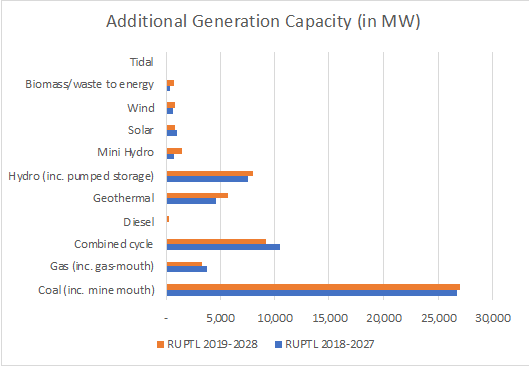
Some information about the plans and current energy sources of RI:


1017
 
Of course the IMF numbers are questionable at best.

In large countries, it is very difficult to put one single number as mortality rate which is pollution related.

I remember in Germany, the industrial Ruhrgebiet could not be compared to the Schwarzwald. And the same for Indonesia, where I wouldn't be surprised if the DKI Jakarta would score worse than Ukraine. But if you include all islands...

It also makes you wonder how this is reported (or guesstimated?); do hospitals and a Ministry of Health keep track of this? I never saw them ask a patient where (s)he was living or doing outside activities/work etc.

And how real(istic) are the numbers, esp. in a country where the amount of smokers is huge?
.
 
I think it would be very difficult to keep accurate figures about pollution-related illnesses and deaths, though I imagine it would be under-reported here in Indonesia.

Does anyone know a good source for keeping track of air quality in regional areas? I know that it's highly variable based on the local environment, but I'd be curious to compare different areas.

This is the best resource I've found so far, but it doesn't cover any of Eastern Indonesia.


Seeing all of the green in [Malaysian] Borneo put me in mind of the annual 'burnoffs' in Kalimantan, I'll have to remember to take a look this year to see how much it changes.
 
‘Sexy Killers’ is a documentary film about the impact of coal mining and coal-fired power plants in Indonesia. The addition of new power plants will only worsen Indonesia’s air quality. So promoting electric cars is useless if power plants use coal. Just look at China and their worst periods during winter of 2012-13, the air was almost unbreathable and the smog affected a wide area (equivalent to the size of Java and Bali combined). The problem is being solved by massive reduction in the use of coal and an increase in the use of gas, renewables, and nuclear. While, on the other hand, Indonesia is increasing the use of coal?


Behind the scenes of Riau 1? Thought process behind why they want coal?
 
Amazing potential:


They talk about charging once per summer. And in this climate...
 
And on a much smaller scale but already available:


.
And then you see critics wrtiting articles like these:


?

Google Translate:

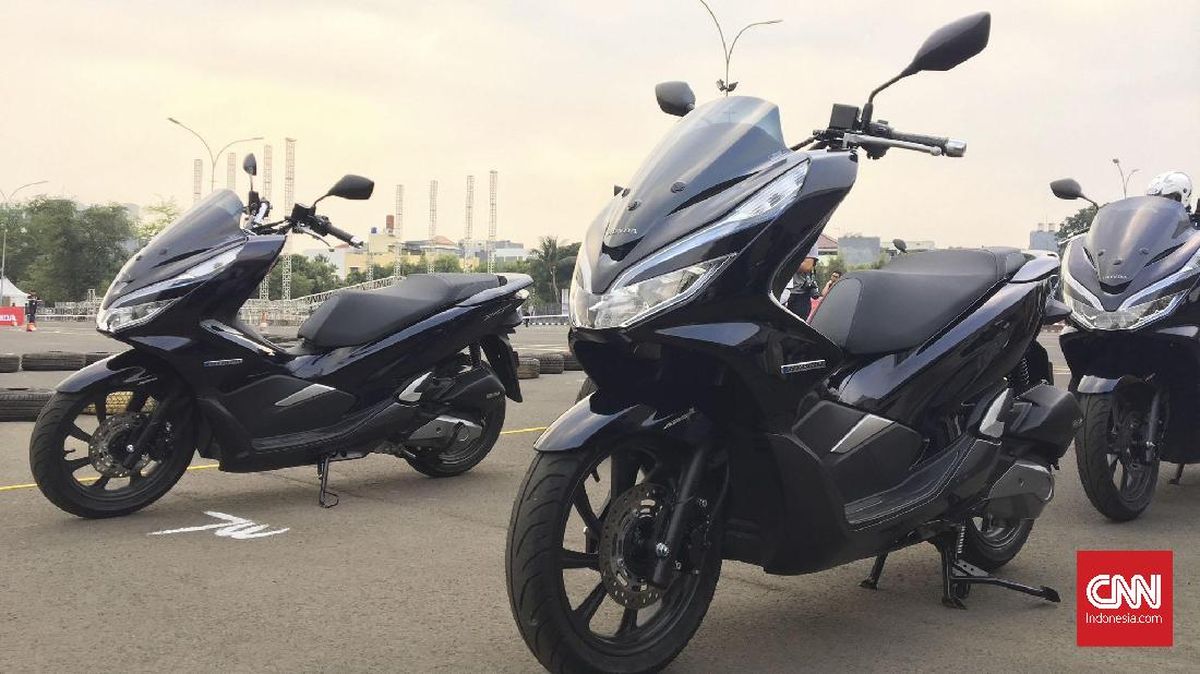
Jakarta, CNN Indonesia - Honda PCX hybrid is considered the 'trigger' for the entry of other hybrid motors to Indonesia thanks to new technology that is claimed to increase driving pleasure.

But behind the 'prestige' of riding a hybrid scooter, prospective customers also have to think of some obstacles to having the motorbike. Prospective buyers must be observant regarding the limitations of the hybrid scooter movement, even though the lithium-ion battery used is maintenance free.

The price of lithium-ion batteries alone reaches Rp7 million, the high price of batteries because of imports from Japan. There are several obstacles to hybrid PCX owners in Indonesia. The following are the obstacles:

1. The owner of a scooter cannot complain about a hybrid PCX problem to any workshop when experiencing problems with travel, especially in the hybrid system. Astra Honda Motor (AHM) just prepared 83 'wing' dealers as the location for repairing the motorbike. The placement is also limited in Indonesia, or only stands in big cities.

2. Consumers cannot make modifications, especially in the electricity sector. Users must be aware that the motorbike is now carrying a lithium-ion battery that is placed behind the seat. In addition to being susceptible to problems, it is certain that the vehicle warranty will usually be lost if the motorbike is damaged due to modification of the electrical part.

3. The owner cannot at any time enjoy the 'kick' of the electric motor whose power is supplied by the type 50.4 v-4 lithium-ion battery Ah. Because if it is used it is not as needed, the battery performance will run out quickly. Generally the battery quality lasts four to five years. This condition will be different if there are consumers who do not question the selling price of the battery.

"Driving style, right if we always use assist D (drive) and S (sport) motors in an abnormal condition, the battery life will be shorter," explained AHM Technical Service Reza Rezdie Shahertian.

4. The last point is the limited storage space in the trunk. In conventional PCX the luggage capacity reaches 28.8 liters, but for the hybrid PCX type it does not cause a portion of the luggage space for lithium-ion battery storage. His advice, the owner uses a motorbike box or additional baggage to store more luggage

 
Amazing potential:

They talk about charging once per summer. And in this climate...

Solar on an electric car is close to pointless, and certainly not worth the added expense.

It's a small space, of which very small amounts will ever be ideally oriented towards the sun. Getting 500w of generation during the middle of a sunny day would be lucky, whereas you can get 8x that amount (or more) plugged into a normal residential outlet. On a really good day you could get about 3kwh into the battery, which would be about 3% charge in a Tesla S long-range, and translates into about 15-20km of distance. The same amount of charge can be added in 30-45 minutes with a residential charger, or just 2 minutes at a Tesla 'Supercharger'.

Having a tiny amount of solar on your car roof will only help your road-trip go 3% further before needing to charge, unless it's cloudy or there are many trees, then only 0-1%.

Solar is fantastic, but it's really best left to large surfaces and open spaces which get consistent sunlight through the day.
 
It's a small space, of which very small amounts will ever be ideally oriented towards the sun. Getting 500w of generation during the middle of a sunny day would be lucky, whereas you can get 8x that amount (or more) plugged into a normal residential outlet. On a really good day you could get about 3kwh into the battery

That's why they use a technology called 'distributed maximum power point tracking'.

It makes sure that all areas, even those not in sunlight, provide the same amount of power.

This car would have a 60KW battery capacity which puts it in the league of the smaller electric cars from Hyundai, Kia etc.

Of course the aerodynamics and weight are both optimized. But still, I think it looks rather promising, esp. if they really can generate enough energy on a sunny day for 50-75 kilometers.
 
On Solar: best case scenario is that you get 350 watts in full sun with 2 square meters of area. let's be generous and say 400 watts with 2 square meters of area. Just how big is this car? Let's say 10 square meters. that's 1.75kW (not counting losses). To fill a 60kWh battery capacity it takes 34 hours.

Don't care that they use a super duper distributed maximum power point tracking (which really is just a DC-DC converter with software that ensures the solar panels are producing the maximum current by changing the voltage). It just means that they have multiple MPPT units within the solar array on the car (hence distributed).

There are competitions for solar cars that try to get the most distance. But I'll tell you for a fact that most of these are uncomfortable, have narrow wheels, not fit (safety or comfort) for day to day use.

Not even solar boats/ships are able to self sustain when propulsion is taken into account. There are boats/ships that are self sufficient energy / power wise with solar for everything but propulsion.
 
Yeah it’s from the Technical University of Delft, they always participate (and often win) in the Solar races in Australia.

It’s a shame the Dutch videos offer much more (technical) information where the English versions stay a bit at the surface.
 
Obviously it would take a long time before this solar technology would be able to have an impact on the transport sector.

Well, not really. What is already in production, is the roof solution for the smaller appliances and applications. Think of aircon, lights, etc.

That will spare and charge the battery 30% which in turn has a positive effect on fuel consumption....

images


Hybrid and Electric vehicles like the Toyota Prius and Hyundai Kona & Ioniq use it also to increase the range. This is up to 10%.
 
Last edited:
Obviously it would take a long time before this solar technology would be able to have an impact on the transport sector.

Well, not really. What is already in production, is the roof solution for the smaller appliances and applications. Think of aircon, lights, etc.

That will spare and charge the battery 30% which in turn has a positive effect on fuel consumption....

images


Hybrid and Electric vehicles like the Toyota Prius and Hyundai Kona & Ioniq use it also to increase the range. This is up to 10%.

Hard to believe the 10 percent claim. Even if you put 2m2 of solar panels on the roof that produces 400 watts, each day under full sun for the whole day it may generate 1.5kwh of energy (net). That's under the best condition. In reality you barely have room for 1.5 m2 on the roof of even that.
Including losses you might get 0.8-0.9kwh per day. This is enough for about 3 miles of driving. I supposed that's something....
 
It makes you wonder yes; 3-5 km extra per day isn't bad of course if it's for driving to school or office only...but for vacation travel, it has the (previous) disadvantage of BEV's. Now of course the counter argument is that for two holidays per year it isn't such a big deal.
 
It seems to have a nefarious impact on the fuel consumption ⛽ having those bikes on the roof. So I guess then it doesn't matter anymore.

On the way to Normandy, I saw some Germans climbing on the roof of their Golf trying to straighten and remove the frames of their bicycles from the toll booth overhang. Which also got a lot of damage. It seems they forgot them and the maximum height was 2 meter.
 
On the way to Normandy, I saw some Germans climbing on the roof of their Golf trying to straighten and remove the frames of their bicycles from the toll booth overhang. Which also got a lot of damage. It seems they forgot them and the maximum height was 2 meter.

That would totally be me... :LOL:
 
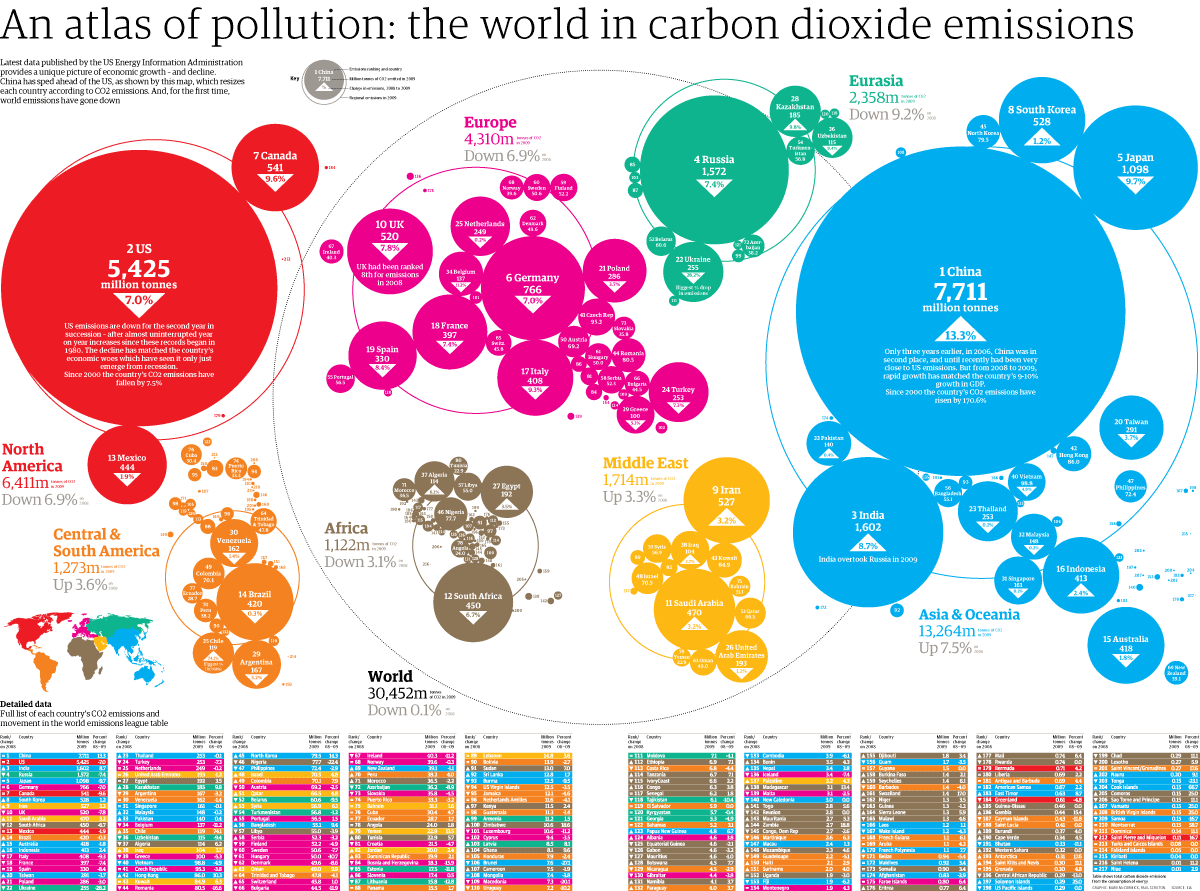
On the CO2 emission per country and continent:

edrrdezd.jpg


donua8v9fwrgf.jpg

.

It seems in Indonesia there are 5.000 power plants (operated by PLN). Of that total, a lot (90%) are small diesel operated plants which are located on other islands than Java.

85% of the plants operate on gas, diesel and (mainly) coal.

From an article in The Guardian:

pollution.gif


Note @jstar : Not very readable but you can see what the biggies are. It is surprising to see that the size of Indonesia's circle is smaller than those of the U.K. and Germany and as big as Italy or ..... Australia ?!


On pure emissions alone, the key points are:

  • China emits more CO2 than the US and Canada put together - up by 171% since the year 2000
  • The US has had declining CO2 for two years running, the last time the US had declining CO2 for 3 years running was in the 1980s
  • The UK is down one place to tenth on the list, 8% on the year. The country is now behind Iran, South Korea, Japan and Germany
  • India is now the world's third biggest emitter of CO2 - pushing Russia into fourth place
  • The biggest decrease from 2008-2009 is Ukraine - down 28%. The biggest increase is the Cook Islands - up 66.7%
But that is only one way to look at the data - and it doesn't take account of how many people live in each country. If you look at per capita emissions, a different picture emerges where:

  • Some of the world's smallest countries and islands emit the most per person - the highest being Gibraltar with 152 tonnes per person
  • The US is still number one in terms of per capita emissions among the big economies - with 18 tonnes emitted per person
  • China, by contrast, emits under 6 tonnes per person, India only 1.38
  • For comparison, the whole world emits 4.49 tonnes per person
 
Last edited:
Somewhat related, interesting development:


Users who viewed this discussion (Total:0)

Follow Us

Latest Expat Indo Articles

Latest Tweets by Expat Indo

Latest Activity

New posts Latest threads

Online Now

No members online now.

Forum Statistics

Threads
6,586
Messages
110,702
Members
3,880
Latest member
urgentemiratesvisa
Back
Top Bottom